What Are the Different Types of Cataract Surgery?

When you are told that you have a cataract, one of the first questions that may come to your mind is:

“What kind of cataract surgery will I need?”

Many people are surprised to learn that cataract surgery is not discussed as just one single approach. Advances in eye care have introduced different surgical techniques, and the most suitable option can depend on several factors related to the cataract and the individual eye.

The type of cataract, its density, the condition of the eye and the surgeon’s assessment can all play a role in deciding the appropriate approach.

Understanding the different types of cataract surgery can help you feel more informed before discussing treatment with your eye specialist.

At Ishwar Eye Centre, the appropriate surgical approach is determined after a detailed evaluation of the patient’s eyes and individual visual needs.

What Happens During Cataract Surgery?

A cataract develops when the natural lens of the eye becomes cloudy.

This clouding can gradually affect vision and may cause symptoms such as blurry vision, glare, difficulty seeing at night or colours appearing less bright.

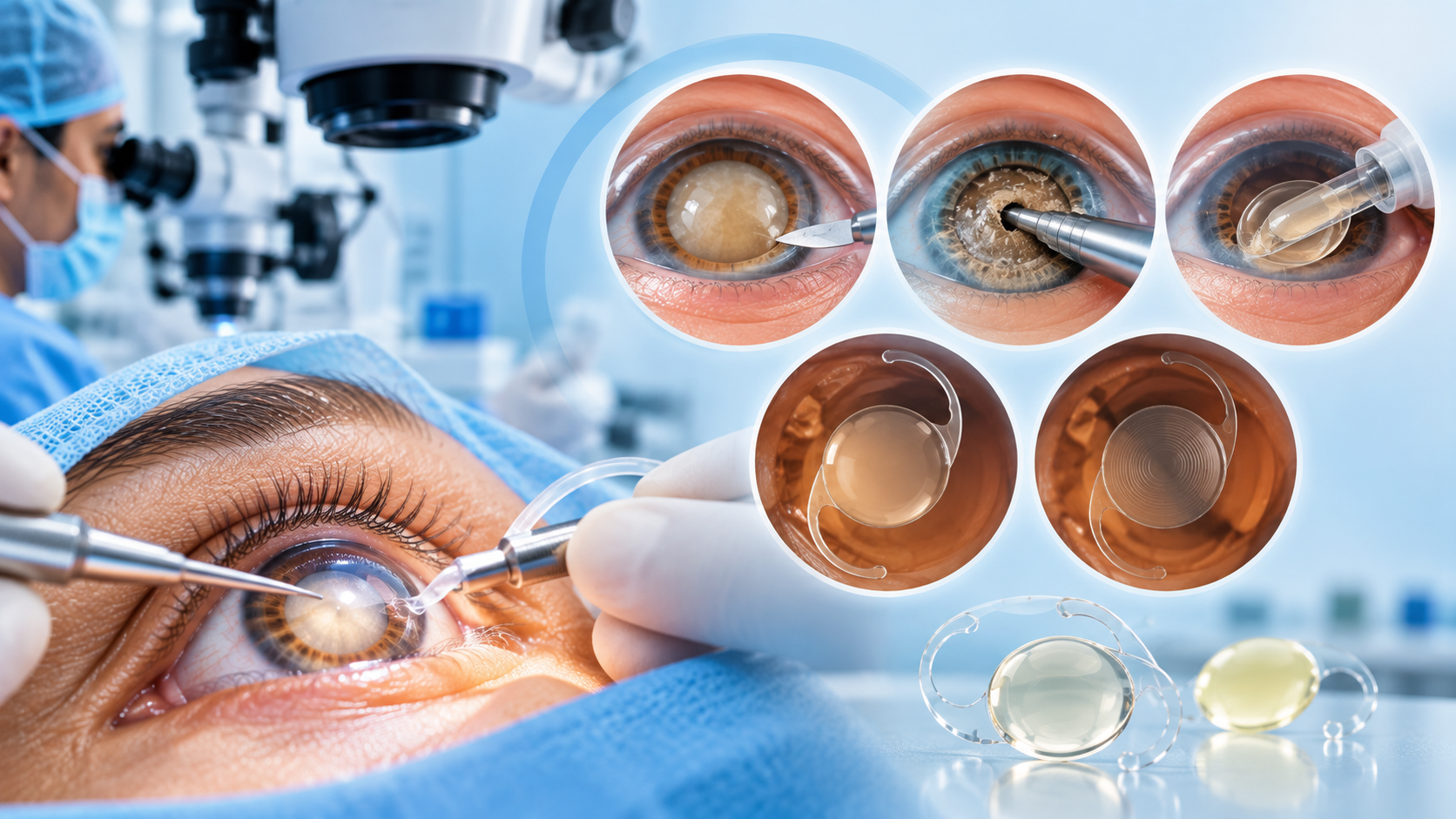
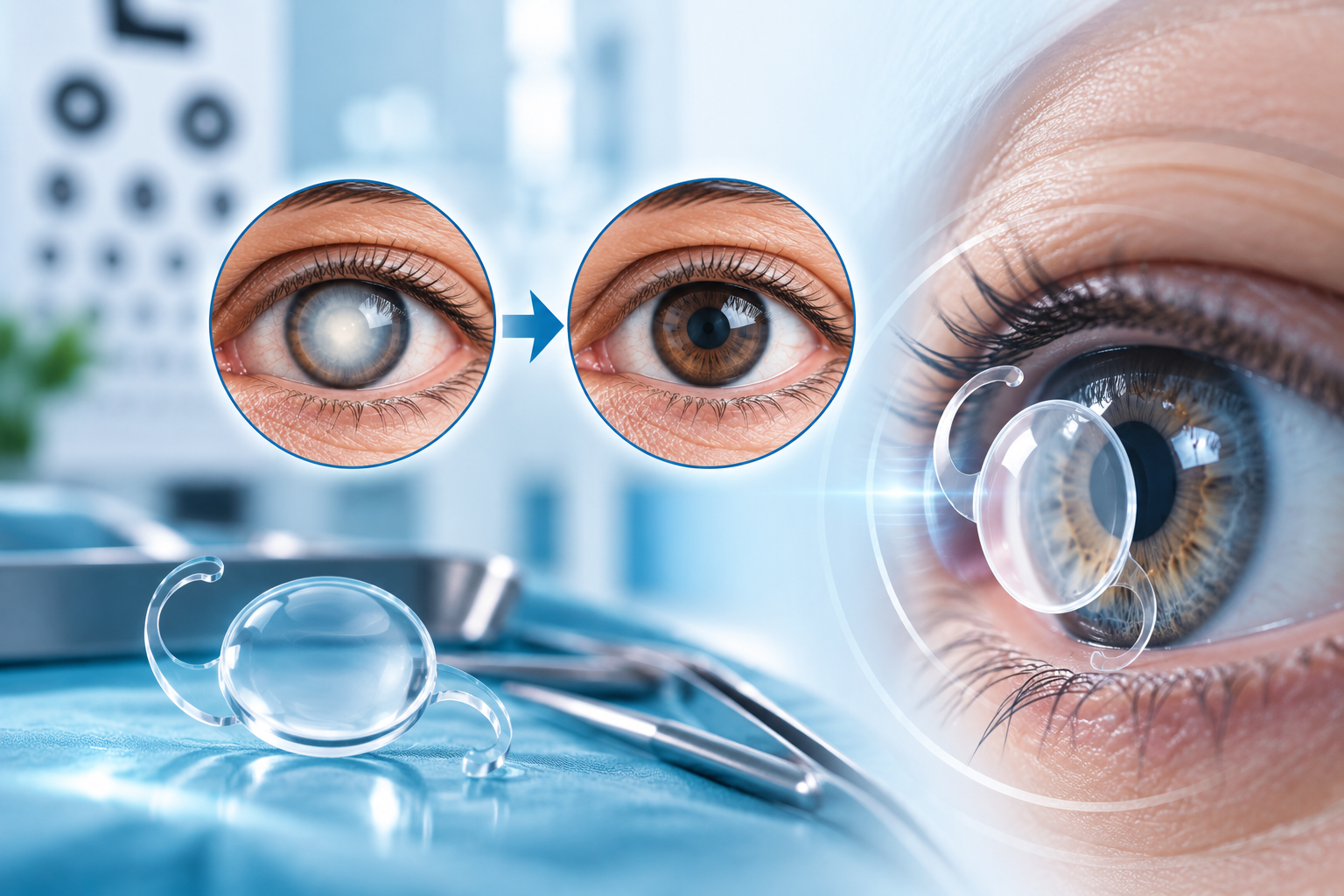
During cataract surgery, the cloudy natural lens is removed and replaced with an artificial lens called an intraocular lens.

The technique used to remove the cataract can vary.

Here are some of the commonly discussed types of cataract surgery.

1. Phacoemulsification Cataract Surgery

Phacoemulsification cataract surgery is one of the commonly used techniques for cataract removal.

In this procedure, a small incision is made in the eye. An ultrasound device is then used to break the cloudy lens into smaller pieces.

These pieces are carefully removed from the eye, and an artificial intraocular lens is placed to replace the natural lens.

Because the cataract is broken into smaller fragments, the lens can be removed through a relatively small opening.

Phacoemulsification has become a widely used approach in modern cataract surgery, but the suitability of the procedure depends on the individual eye and cataract condition.

What Are the Advantages of Phacoemulsification?

Phacoemulsification is associated with a smaller incision compared with some traditional surgical approaches.

The procedure may offer benefits such as:

• A relatively small surgical incision

• Reduced need for stitches in suitable cases

• A shorter recovery period in many patients

• The ability to remove the cataract through a smaller opening

However, every surgery and recovery experience can vary.

Your eye doctor can explain whether phacoemulsification is suitable based on the condition of your eye.

2. Micro Incision Cataract Surgery, MICS

Micro incision cataract surgery, or MICS, is a cataract surgery technique performed through a very small incision.

It is based on the principle of removing the cataract through a smaller surgical opening.

Specialised instruments and techniques are used during the procedure.

The goal is to minimise the size of the incision while safely removing the cataract and placing an intraocular lens.

The exact approach can depend on factors such as the cataract, the condition of the cornea and other individual eye characteristics.

How Is MICS Different From Regular Cataract Surgery?

The main difference relates to the size of the incision used during the procedure.

Micro incision cataract surgery uses a very small incision and may involve specialised equipment and surgical techniques.

However, a smaller incision alone does not mean that one procedure is automatically better for every patient.

The right approach depends on several factors.

Your eye surgeon will recommend the technique that is most appropriate for your individual condition.

3. Small Incision Cataract Surgery, SICS

Small incision cataract surgery, or SICS, is another approach used for cataract removal.

During this procedure, a small incision is made to remove the cataract and replace the cloudy natural lens with an intraocular lens.

SICS may be considered in certain situations depending on the nature and density of the cataract and other eye related factors.

The surgical technique and incision are different from those used in phacoemulsification.

Your eye doctor can explain which technique may be suitable and why.

When Is Small Incision Cataract Surgery Considered?

The choice between small incision cataract surgery and other techniques depends on the individual patient.

Factors that may influence the decision include:

• The type and density of the cataract

• The overall condition of the eye

• Corneal health

• Previous eye conditions or surgeries

• The surgeon’s assessment

There is no single cataract surgery technique that is ideal for every person.

A detailed examination helps determine the safest and most appropriate option.

4. Laser Assisted Cataract Surgery, FLACS

Laser assisted cataract surgery, also known as FLACS, uses femtosecond laser technology during certain steps of cataract surgery.

The laser may be used to assist with specific parts of the procedure, depending on the surgical plan and the patient’s eye condition.

After the laser assisted steps, additional surgical steps are performed to remove the cataract and place the artificial lens.

FLACS is different from traditional phacoemulsification techniques because laser technology is used during selected stages of the surgery.

FLACS can prolong the surgical time because two machines and multiple interfaces are involved.

However, laser assisted surgery may not be necessary or suitable for every cataract.

Your eye doctor can help you understand whether this approach is appropriate for your condition.

Is Laser Assisted Cataract Surgery Better?

This is a common question.

The answer is not the same for everyone.

Technology can play an important role in cataract surgery, but the best procedure depends on your individual eye, cataract characteristics and overall treatment needs.

FLACS does not offer any proven advantage over the established phacoemulsification procedure. The laser is used only in a few steps of the procedure, while the main part of the surgery is still performed using the conventional phacoemulsification machine. There is no advantage in terms of surgical time or safety compared with phacoemulsification.

A newer or more advanced sounding technique is not automatically the right choice for every patient.

The most important thing is selecting an approach that is appropriate for your eye.

Your doctor can explain the expected benefits and limitations of the recommended procedure.

What About the Artificial Lens Used in Cataract Surgery?

The surgical technique is only one part of cataract treatment.

Another important consideration is the type of intraocular lens used to replace the cloudy natural lens.

Different lenses may be available depending on your visual needs and eye condition.

Your doctor may discuss options related to distance vision, near vision or other visual requirements.

The most appropriate lens choice depends on your individual eyes and lifestyle needs.

This is why cataract surgery planning usually involves more than simply choosing between different surgical techniques.

How Does the Doctor Decide Which Cataract Surgery Is Right for You?

Your cataract surgeon will usually consider several factors before recommending a surgical approach.

These may include:

• The density and type of cataract

• The condition of your cornea

• The overall health of your eye

• Previous eye surgery

• Your visual requirements

• Other existing eye conditions

• The results of your eye examination

The decision is personalised.

Two people with cataracts may not necessarily need the exact same surgical approach.

Which Type of Cataract Surgery Has the Fastest Recovery?

Recovery after cataract surgery can depend on several factors, including the technique used and the condition of the individual eye.

Some procedures use smaller incisions, which may influence the recovery process.

However, recovery should not be judged only by the size of the incision.

Your overall eye health, the complexity of the surgery and how well you follow post operative instructions can also affect healing.

Your doctor can give you a better understanding of what to expect based on the procedure recommended for you.

Is Cataract Surgery Painful?

Cataract surgery is usually performed with appropriate anaesthesia to keep the procedure comfortable.

You may feel some pressure or sensations during the procedure, but your surgical team will guide you throughout the process.

After surgery, mild discomfort or irritation may occur during the initial recovery period.

Your doctor will provide instructions about medications and eye care after the procedure.

If you experience severe pain or a sudden change in vision after surgery, it is important to contact your eye doctor.

Choosing the Right Approach Matters

Learning about the different types of cataract surgery can help you understand the options available.

Phacoemulsification cataract surgery, micro incision cataract surgery, small incision cataract surgery and laser assisted cataract surgery are different approaches that may be considered depending on the individual case.

The goal is not to choose the procedure with the most advanced sounding name.

It is to choose the approach that is safe and appropriate for your eyes.

At Ishwar Eye Centre, a detailed eye evaluation can help determine the suitable cataract treatment approach based on your cataract, eye health and visual needs.

If you have been advised cataract surgery, discussing your concerns with an eye specialist can help you understand the procedure, recovery and treatment options available to you.

The right information can make the journey feel a little less overwhelming.

And when it comes to your vision, understanding your options is always a good place to begin.

Frequently Asked Questions

What are the different types of cataract surgery?

Some commonly discussed types include phacoemulsification cataract surgery, micro incision cataract surgery, small incision cataract surgery and laser assisted cataract surgery.

What is phacoemulsification cataract surgery?

Phacoemulsification is a technique in which ultrasound energy is used to break the cloudy cataract lens into smaller pieces so that it can be removed through a relatively small incision.

What is micro incision cataract surgery?

Micro incision cataract surgery, or MICS, is performed through a very small surgical incision using specialised instruments and techniques.

What is small incision cataract surgery?

Small incision cataract surgery, or SICS, is another surgical approach used to remove a cataract and replace the cloudy natural lens with an artificial intraocular lens.

What is laser assisted cataract surgery, FLACS?

FLACS uses femtosecond laser technology to assist with selected steps during cataract surgery. Your eye doctor can determine whether it is appropriate for your individual condition.

Which type of cataract surgery is best?

There is no single procedure that is best for everyone. The most suitable technique depends on factors such as the cataract, eye health and individual visual requirements.

How does a doctor decide which cataract surgery is suitable?

Your doctor may consider the type and density of the cataract, corneal health, overall eye condition, previous eye procedures and your visual needs before recommending a surgical approach.

Know About LASIK and Eligibility Criteria for LASIK Laser Surgery

Waking up in the morning and reaching for your glasses.

Searching for them before you can even see clearly.

Taking extra care of contact lenses.

For many people with refractive errors, these everyday experiences eventually lead to one question:

“Can I get LASIK surgery?”

LASIK has become one of the most commonly discussed options for people who want to reduce their dependence on glasses or contact lenses. However, LASIK is not a one size fits all procedure.

Just because someone has spectacles does not automatically mean they are suitable for LASIK.

Your age, eye power, corneal thickness, overall eye health and several other factors can influence whether laser vision correction is appropriate for you.

This is why a proper laser vision correction eligibility check is an important first step before considering LASIK surgery.

At Ishwar Eye Centre, a detailed eye evaluation can help determine whether LASIK or another vision correction option may be suitable based on your individual eye condition.

What Is LASIK Surgery?

LASIK is a type of laser vision correction procedure used to treat certain refractive errors.

Refractive errors occur when light does not focus correctly on the retina, which can result in blurred vision.

LASIK may be used to correct conditions such as:

• Nearsightedness, also known as myopia

• Farsightedness, also known as hyperopia

• Astigmatism

During the procedure, a laser is used to reshape the cornea so that light can focus more accurately on the retina.

The goal is to improve vision and reduce dependence on glasses or contact lenses.

However, the outcome and suitability of LASIK can vary from person to person.

This brings us to an important question.

Who Is a Candidate for LASIK Surgery?

There is no single answer that applies to everyone.

A person may be considered a potential candidate for LASIK based on several factors, including their age, stability of eye power, corneal health and overall eye condition.

The most important part is not deciding on your own whether you are suitable.

It is undergoing a detailed eye examination.

A proper assessment helps your eye doctor understand whether LASIK is safe and appropriate for your eyes.

LASIK Eligibility Criteria

The LASIK eligibility criteria involve more than simply checking your spectacle power.

Your eye doctor may consider several factors before recommending the procedure.

These may include:

• Your age

• The stability of your spectacle power

• The type and degree of refractive error

• Corneal thickness

• Corneal shape

• Overall eye health

• Presence of dry eye

• Retinal health

• Other medical or eye related conditions

Not everyone who meets one or two of these requirements will automatically be suitable for LASIK.

The final decision is based on a complete evaluation of the eye.

What Is the LASIK Age Limit and Requirements?

One of the common questions people ask is:

“What is the right age for LASIK?”

LASIK is generally considered for adults whose eye power has stabilised.

This is important because if the spectacle number is still changing significantly, undergoing laser vision correction may not provide the expected long term result.

There is no single age at which everyone automatically becomes eligible.

Your eye doctor will assess whether your refractive error has remained stable and whether your eyes have developed sufficiently for the procedure.

The LASIK age limit and requirements can also depend on your individual eye health.

As we grow older, other age related changes can occur in the eye. These may influence whether LASIK is the right option or whether another form of vision correction would be more appropriate.

This is why age is only one part of the evaluation.

Why Does Stable Eye Power Matter?

Imagine changing the prescription of your glasses every few months.

This may indicate that your refractive error is still changing.

LASIK reshapes the cornea based on your current refractive error. If your eye power continues to change after the procedure, you may eventually require glasses again or experience a change in vision.

For this reason, your doctor will usually review whether your spectacle power has remained reasonably stable before recommending LASIK.

A stable prescription does not guarantee eligibility.

But it is an important part of the evaluation.

What Is the Minimal Corneal Thickness for LASIK?

Corneal thickness is one of the important factors assessed during LASIK eligibility.

The cornea is the clear front surface of the eye. During LASIK, a small amount of corneal tissue is reshaped using a laser.

For this reason, the cornea needs to have sufficient thickness and appropriate structural characteristics for the procedure to be considered safe.

Many people search for a specific number when asking about minimal corneal thickness for LASIK.

However, there is no single thickness that can determine eligibility for everyone.

The amount of tissue that may need to be reshaped depends on factors such as your refractive error, corneal shape and the planned procedure.

Your eye doctor will perform corneal measurements and evaluate whether sufficient corneal tissue can remain after laser treatment.

In other words, corneal thickness is important, but it is not assessed in isolation.

Why Is Corneal Shape Important?

A cornea may have adequate thickness but still require further evaluation because of its shape.

During a LASIK evaluation, your doctor may perform specialised tests to study the curvature and structure of the cornea.

This helps identify whether the cornea appears healthy and suitable for laser vision correction.

Certain corneal conditions may make LASIK unsuitable or may require an alternative treatment approach.

This is one reason why a comprehensive laser vision correction eligibility check is essential.

A standard vision test alone cannot determine whether someone is suitable for LASIK.

Does Your Spectacle Number Matter?

Yes, your refractive error is one of the factors considered during LASIK evaluation.

However, having a high or low spectacle number does not automatically mean that LASIK is either suitable or unsuitable.

The type of refractive error, the amount of correction required and the overall health and structure of your eye are all considered.

Your doctor may discuss the expected results and limitations based on your individual prescription.

In some cases, another type of vision correction procedure may be more appropriate.

Can Dry Eyes Affect LASIK Eligibility?

Dry eye symptoms are another important consideration.

If you already experience significant dryness, burning, irritation or discomfort, your eye doctor may assess this before recommending LASIK.

LASIK can affect the surface of the eye, and existing dry eye symptoms may need to be evaluated and managed.

This does not mean that every person with dry eye is automatically unsuitable for LASIK.

However, it does mean that the condition should be properly assessed before making a decision.

Can Everyone With Healthy Eyes Undergo LASIK?

Not necessarily.

Good general vision and healthy eyes do not automatically mean that LASIK is the right procedure.

A person may have healthy eyes but still have factors related to corneal thickness, corneal shape, eye power or other measurements that need consideration.

This is why it is important to avoid comparing your eligibility with someone else’s.

Your friend may have undergone LASIK successfully.

That does not automatically mean the procedure is suitable for you.

Every eye is different.

What Happens During a LASIK Eligibility Check?

A detailed LASIK evaluation usually involves more than reading letters from an eye chart.

Your eye doctor may perform tests to assess:

• Your current refractive error

• Stability of your eye power

• Corneal thickness

• Corneal shape and curvature

• Overall corneal health

• Tear film and dry eye concerns

• Retinal health

• Other eye conditions that may affect suitability

The evaluation helps your doctor determine whether LASIK may be an appropriate option and whether another procedure should be considered instead.

The goal is not to simply approve everyone for surgery.

The goal is to find the safest and most suitable option for your eyes.

What If You Are Not Eligible for LASIK?
Being told that LASIK is not suitable can feel disappointing.

But it does not necessarily mean that there are no other options for vision correction.

For patients who are not eligible for LASIK, a suitability check can be done for ICL (Implantable Collamer Lens) implantation, which is an equally good technique for removing glasses. At Ishwar Eye Centre, we have more than a decade of experience with both LASIK and ICL surgery.

Depending on your eye condition, your doctor may discuss other treatment options that may be more appropriate.

The important thing is not to undergo a procedure simply because you want freedom from glasses. The procedure should be suitable for your eyes.

A personalised recommendation based on a detailed examination is always more important than choosing a procedure based on popularity.


Being told that LASIK is not suitable can feel disappointing.

But it does not necessarily mean that there are no other options for vision correction.

Depending on your eye condition, your doctor may discuss other treatment options that may be more appropriate.

The important thing is not to undergo a procedure simply because you want freedom from glasses.

The procedure should be suitable for your eyes.

A personalised recommendation based on a detailed examination is always more important than choosing a procedure based on popularity.

How Should You Prepare for a LASIK Consultation?

Before your consultation, be ready to discuss your eye history and any previous eye conditions or treatments.

Tell your doctor if you:

• Have experienced frequent dry eyes

• Have had previous eye surgery

• Have any known corneal condition

• Take regular medications

• Have experienced changes in your vision

• Have a history of eye disease

Your doctor may also provide specific instructions regarding contact lens use before your LASIK evaluation, as contact lenses can temporarily affect the shape of the cornea.

Following these instructions can help ensure that your eye measurements are accurate.

Is LASIK the Right Choice for You?

LASIK can be an effective option for suitable candidates, but eligibility should always be based on a proper eye examination.

The most important question is not:

“Can LASIK remove my glasses?”

It is:

“Is LASIK safe and suitable for my eyes?”

A comprehensive evaluation can help answer that question.

At Ishwar Eye Centre, a detailed eye assessment can help determine whether you meet the LASIK eligibility criteria and whether LASIK laser surgery or another vision correction option may be appropriate for your individual needs.

The right procedure begins with the right evaluation.

Because when it comes to your vision, suitability matters just as much as the procedure itself.

Frequently Asked Questions

Who is a candidate for LASIK surgery?

A potential candidate for LASIK is usually assessed based on factors such as age, stable eye power, corneal thickness, corneal shape, refractive error and overall eye health. A detailed eye examination is required to determine individual eligibility.

What is the LASIK age limit and requirements?

LASIK is generally considered for adults whose eye power has stabilised. However, age alone does not determine eligibility. Your eye doctor will also assess your eye health, cornea and refractive error.

What is the minimal corneal thickness for LASIK?

There is no single corneal thickness that determines LASIK eligibility for everyone. The required thickness depends on factors such as corneal structure, eye power and the amount of corneal tissue that may need to be reshaped.

Can I undergo LASIK if my spectacle power is still changing?

If your spectacle power is changing significantly, your doctor may recommend waiting until it becomes stable before considering LASIK. The appropriate decision depends on your individual eye condition.

Can dry eyes affect LASIK surgery?

Yes. Dry eye symptoms are assessed during a LASIK evaluation because they may affect suitability and recovery. Your doctor can determine whether dry eye needs to be managed before considering laser vision correction.

What happens if I am not eligible for LASIK?

If LASIK is not suitable for you, your eye doctor may discuss other vision correction options depending on your eye condition. Not being eligible for LASIK does not automatically mean there are no other options.

How can I check my eligibility for LASIK?

A comprehensive laser vision correction eligibility check with an eye specialist can assess your eye power, corneal thickness, corneal shape, dry eye concerns and overall eye health.

Can Cataracts Reoccur After Cataract Surgery?

You have undergone cataract surgery, your vision improved, and life gradually became clearer again.

Then, months or even years later, you start noticing something familiar.

Your vision seems blurry again.

Naturally, one question may come to mind:

“Can cataracts come back after surgery?”

The short answer is no, the original cataract does not come back.

During cataract surgery, the cloudy natural lens is removed and replaced with an artificial lens. Since the natural lens has been removed, the same cataract cannot form again.

However, some people may experience blurry vision after cataract surgery due to a condition called posterior capsule opacification, or PCO. This is sometimes referred to as a “secondary cataract”, even though it is not actually a new cataract.

Understanding the difference can help you know what may be happening and when it is time to see your eye doctor.

Can Cataracts Come Back After Surgery?

No. A cataract does not grow back after the natural lens has been removed during cataract surgery.

But this is where the confusion often begins.

During surgery, the artificial lens is usually placed inside a thin membrane called the lens capsule. Over time, the back part of this capsule can become cloudy in some patients.

When this happens, it can affect the clarity of vision.

Because the symptoms may feel similar to cataract symptoms, many people believe that their cataract has returned.

In reality, it may be posterior capsule opacification, also known as PCO.

What Is Posterior Capsule Opacification?

Posterior capsule opacification occurs when the back portion of the lens capsule becomes cloudy after cataract surgery.

The capsule itself is an important part of the eye because it helps hold the artificial lens in place.

Over time, changes in cells around the capsule can cause this area to become less clear. As a result, light may not pass through the eye as clearly as before.

This can lead to symptoms that feel very similar to having a cataract.

PCO is sometimes called a secondary cataract, but it is important to understand that it is not the same as a cataract coming back.

The original cataract has already been removed.

What Are Secondary Cataract Symptoms?

The symptoms of posterior capsule opacification can vary from person to person.

Some of the common secondary cataract symptoms may include:

• Blurry or cloudy vision

• Gradual reduction in vision clarity

• Glare or difficulty with bright lights

• Difficulty seeing clearly while driving at night

• Increased sensitivity to light

• Colours appearing less bright than before

• A feeling that your vision is becoming cloudy again

These symptoms can sometimes develop gradually, which is why they may not be immediately noticeable.

You may simply feel that your vision is no longer as sharp as it was after cataract surgery.

Why Is My Vision Blurry Months After Cataract Surgery?

If you are experiencing blurry vision months after cataract surgery, PCO can be one possible reason.

However, it is not the only possible cause.

Changes in the eye, dry eye, problems involving the retina or other eye conditions can also affect vision after cataract surgery.

This is why it is important not to assume that blurry vision is automatically due to a secondary cataract.

An eye examination can help identify what is actually causing the change in your vision.

If your vision was clear after surgery and has gradually started becoming blurry again, it is worth discussing this with your eye doctor.

How Soon Can Posterior Capsule Opacification Develop?

PCO does not always develop at the same time for everyone.

Some people may develop it months after cataract surgery, while others may notice changes much later.

Not everyone who undergoes cataract surgery will experience posterior capsule opacification.

The timing and likelihood can vary depending on individual factors.

This is one reason why regular eye check ups remain important even after a successful cataract procedure.

Your eye doctor can monitor your vision and identify any changes that may need attention.

Is Posterior Capsule Opacification Serious?

PCO can affect the quality of your vision, but it can usually be treated.

The important thing is to have your symptoms evaluated properly.

Do not ignore gradual changes in vision simply because you have already undergone cataract surgery.

Many people assume that once cataract surgery is completed, they will never need another eye examination.

But your eyes can still experience other changes over time.

Regular eye care helps identify whether blurry vision is related to PCO or another eye condition that may require a different approach.

How Is Posterior Capsule Opacification Treated?

When PCO significantly affects vision, your eye doctor may recommend a procedure called YAG laser capsulotomy.

This procedure uses a specialised laser to create a small opening in the cloudy part of the capsule.

This allows light to pass through more clearly again.

YAG laser capsulotomy is different from cataract surgery. It does not involve removing the artificial lens.

The procedure is usually performed to address the cloudy capsule that has developed behind the lens implant.

Your doctor will first examine your eye and determine whether YAG laser treatment is appropriate for your condition.

What Happens During a YAG Laser Capsulotomy?

Before the procedure, your eye doctor may use eye drops to prepare your eye.

You will usually sit in front of the laser machine while the doctor performs the treatment.

The laser creates an opening in the cloudy posterior capsule.

The procedure is generally completed without the need for another cataract operation.

Your doctor will explain what to expect based on your individual condition and may provide specific instructions for aftercare.

What Is YAG Laser Capsulotomy Recovery Like?

One common question is about YAG laser capsulotomy recovery.

Recovery can vary from person to person, but many patients can return to their regular routine relatively soon after the procedure.

Your doctor may prescribe eye drops and advise you about any precautions you need to follow.

Some people may notice improvement in their vision after treatment, while the exact timing can vary depending on the individual eye and any other underlying conditions.

It is important to attend any follow up appointments recommended by your doctor.

These visits allow your eye specialist to check your recovery and ensure that your eye is responding appropriately after the procedure.

Can Posterior Capsule Opacification Come Back After YAG Laser Treatment?

The treatment creates an opening in the cloudy capsule to allow light to pass through more clearly.

Your eye doctor can explain what to expect in your individual case and answer any concerns you may have about long term vision after treatment.

If you experience changes in your vision after any eye procedure, it is always best to have them evaluated rather than making assumptions about the cause.

When Should You See an Eye Doctor?

You should consider seeing an eye doctor if you notice a gradual or sudden change in your vision after cataract surgery.

This may include:

• Blurry or cloudy vision

• Increasing glare

• Difficulty seeing at night

• Sudden changes in vision

• New flashes of light

• A sudden increase in floaters

• Eye pain or significant redness

Not every change in vision after cataract surgery is caused by PCO.

An examination can help determine whether the problem is related to posterior capsule opacification or another eye condition.

Cataract Surgery Is Not the End of Eye Care

Cataract surgery can significantly improve vision affected by a cloudy lens.

But having cataract surgery does not mean you will never need another eye examination.

PCO, dry eye, retinal conditions and other eye problems can still affect vision after surgery.

If your vision becomes blurry again, the answer may not be that your cataract has returned.

In many cases, the cause needs to be properly identified before deciding what treatment is appropriate.

At Ishwar Eye Centre, patients can receive evaluation for changes in vision after cataract surgery and guidance about appropriate treatment options based on their individual eye condition.

The most important thing is not to ignore changes.

If your vision was clear and has gradually become cloudy again, getting it checked can help you understand what is happening and what can be done next.

Frequently Asked Questions

Can cataracts come back after surgery?

No. The original cataract does not come back because the cloudy natural lens is removed during cataract surgery. However, some people may develop posterior capsule opacification, which can cause similar symptoms.

What is a secondary cataract?

A secondary cataract is a common term used to describe posterior capsule opacification. It is not a new cataract. It occurs when the capsule behind the artificial lens becomes cloudy.

What are the symptoms of posterior capsule opacification?

Symptoms may include blurry or cloudy vision, glare, sensitivity to light, difficulty seeing at night and a gradual reduction in vision clarity.

Why is my vision blurry months after cataract surgery?

PCO can be one possible cause of blurry vision months after cataract surgery. However, other eye conditions can also affect vision, so an eye examination is important.

How is posterior capsule opacification treated?

If PCO is affecting your vision, your eye doctor may recommend YAG laser capsulotomy to create an opening in the cloudy capsule.

Is YAG laser capsulotomy another cataract surgery?

No. YAG laser capsulotomy is different from cataract surgery. It is a laser procedure used to treat clouding of the posterior capsule after cataract surgery.

How long does YAG laser capsulotomy recovery take?

Recovery can vary from person to person. Your doctor can provide specific guidance about aftercare, medications and when you can return to your regular activities.

Post Op Instructions After Cataract Operation

Cataract surgery is an important step towards improving vision. For many people, the procedure itself may feel like the biggest part of the journey.

But the care you take after surgery matters too.

Once you return home, you may have several questions. Can I wash my face? Can I sleep normally? Why is my vision still slightly blurry? When can I get back to my regular routine?

These are all common concerns.

The eye needs time to heal after cataract surgery, and following the instructions given by your doctor can help support a smooth recovery. While recovery can vary from person to person, understanding the basic post op instructions after cataract operation can help you feel more prepared during the healing period.

At Ishwar Eye Centre, patients are guided about the care and precautions they need to follow after cataract surgery based on their individual condition and recovery.

What Happens After Cataract Surgery?

Cataract surgery involves removing the cloudy natural lens and replacing it with an artificial intraocular lens.

Although the procedure is usually completed in a relatively short time, the eye still needs time to heal afterwards.

During the initial recovery period, some people may experience mild discomfort, watering, sensitivity to light or slightly blurred vision. These symptoms can vary depending on the individual and the type of cataract surgery performed.

The most important thing is to follow your doctor’s advice and attend your scheduled follow up appointments.

Here are some important cataract surgery recovery precautions to keep in mind.

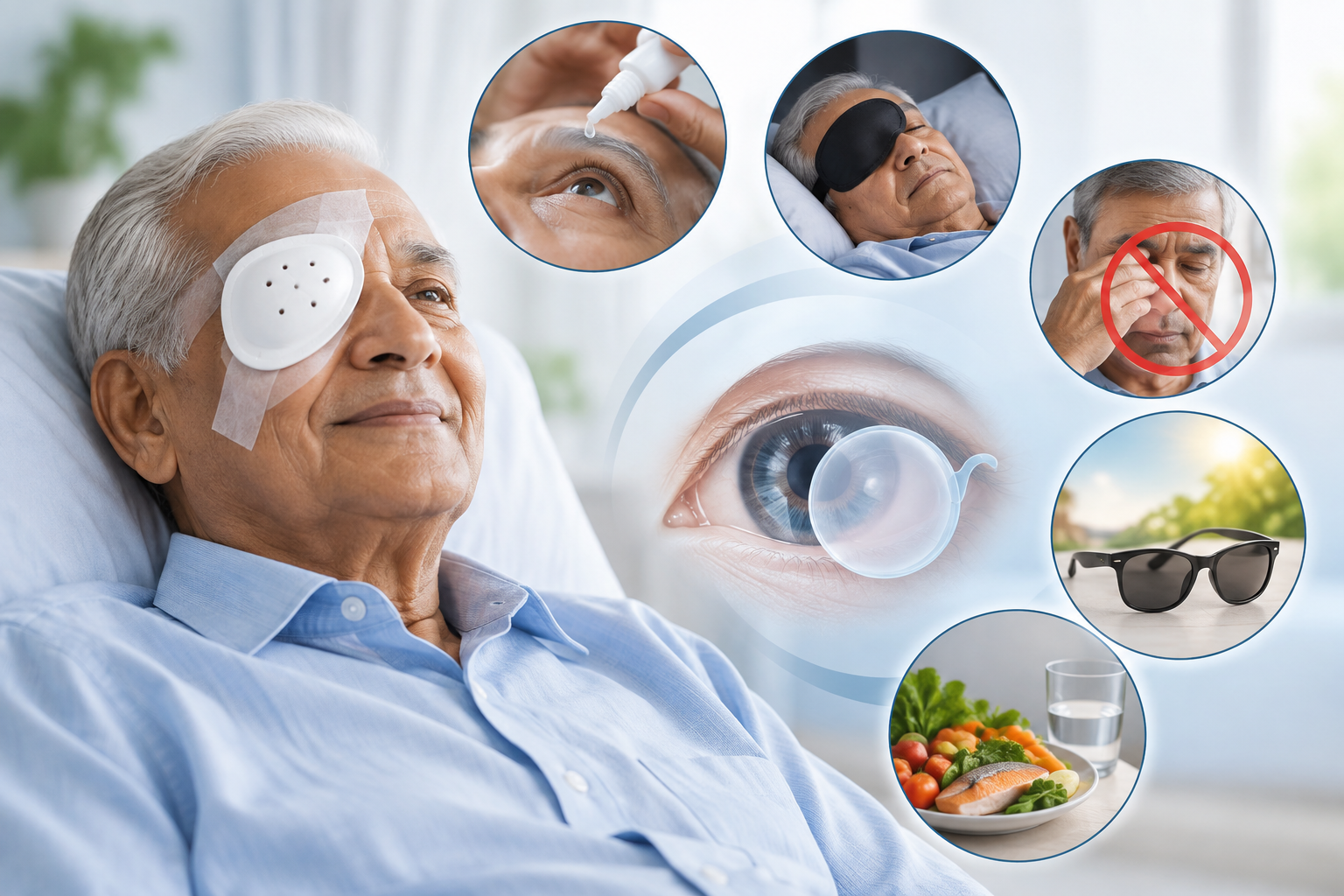
1. Use Your Eye Drops as Prescribed

After cataract surgery, your doctor may prescribe eye drops to support the healing process and help manage inflammation or reduce the risk of infection.

It is important to use them exactly as instructed. If you need to use more than one type of eye drop, wait at least 10 minutes between any two drops.

Before applying eye drops, wash your hands properly. Try not to touch the tip of the bottle with your fingers, eyelashes or eye.

Do not stop using your medication simply because your eye feels better.

Your doctor will advise you about how often to use the drops and when they can be reduced or stopped.

2. Avoid Rubbing or Pressing Your Eye

Your eye may feel slightly itchy or uncomfortable during the early stages of recovery.

It can be tempting to rub it.

Try not to.

Rubbing or pressing the operated eye can interfere with healing and may cause unnecessary irritation. If your eye is watering, gently clean the area around the eye without applying pressure directly to it.

If you experience persistent discomfort or irritation, speak to your eye doctor rather than trying to treat the problem yourself.

3. Protect Your Eye While Sleeping

Your doctor may recommend wearing an eye shield while sleeping for a certain period after cataract surgery.

This helps protect the eye from accidental rubbing or pressure while you are asleep.

We often move without realising it during the night. An eye shield can provide an additional layer of protection during the initial healing period.

Follow your doctor’s instructions about when and how long to use it.

4. Be Careful While Bathing and Washing Your Face

You can continue with your regular hygiene routine, but you may need to take extra care during the initial recovery period.

Avoid getting soap, shampoo or unclean water directly into the operated eye.

When washing your face, do so gently and avoid rubbing around the eye. If you are washing your hair, be careful to prevent shampoo or water from entering the eye.

Your doctor may provide specific instructions depending on your recovery.

Following them carefully can help protect the healing eye.

5. Avoid Heavy Lifting and Strenuous Activities

After cataract surgery, you may start feeling better quite quickly.

That does not always mean the eye has completely healed.

Avoid heavy lifting, intense exercise and strenuous physical activities until your doctor advises that it is safe to resume them.

The recovery timeline can differ from person to person. Your eye doctor can guide you about when you can gradually return to your normal routine.

6. Avoid Dust and Other Irritants

During the recovery period, it is important to protect your eye from dust, smoke and other irritants. For at least 7 days after surgery, avoid dust, direct sunlight and anything that may irritate the operated eye.

If you need to step outside, your doctor may recommend appropriate eye protection. Avoid exposing the operated eye to direct sunlight and take suitable precautions when outdoors.

Try to avoid situations where dust or particles can easily enter your eye. Also, avoid getting water directly into the operated eye during this early recovery period.

A little caution during the early days can help prevent unnecessary irritation.

7. Do Not Go Swimming Until Your Doctor Advises It

Swimming pools and other water bodies may expose the healing eye to bacteria and other irritants.

It is usually important to avoid swimming until your eye doctor confirms that it is safe to resume.

If you are unsure about any activity during your recovery, it is always better to ask.

A quick question to your doctor can prevent unnecessary complications.

8. Avoid Eye Makeup for Some Time

Eye makeup such as kajal, eyeliner and mascara should generally be avoided during the initial healing period.

Makeup products can introduce particles or bacteria close to the operated eye.

Your doctor can tell you when it is safe to start using eye cosmetics again.

Until then, giving your eye a little break is the safer option.

9. Give Your Vision Time to Improve

One of the most common concerns after cataract surgery is:
“My vision is not completely clear yet. Is something wrong?”

Not always.

Vision can take time to settle after surgery. Some people may notice improvement quickly, while others may experience temporary blurriness or changes in vision during the healing period. If glasses are required after cataract surgery, they are generally advised at around 4 weeks after surgery.

The exact recovery experience can vary.

However, if you notice a sudden change in your vision or something that feels unusual, contact your doctor rather than waiting for it to improve on its own.

10. Do Not Drive Until You Are Advised It Is Safe

Clear and stable vision is important for driving safely.

After cataract surgery, your vision may still be adjusting. Your doctor will guide you about when it is appropriate for you to resume driving.

Do not rush this step.

Even if you feel better, it is important to make sure your vision is suitable for safe driving.

11. Attend All Your Follow Up Appointments

Follow up visits are an important part of cataract surgery recovery.

Your eye doctor may examine your eye to check how well it is healing and whether there are any concerns that need attention.

Even if your eye feels fine and your vision seems to be improving, do not skip your scheduled appointments.

Some concerns may not always cause obvious symptoms in the beginning.

Regular follow up allows your doctor to monitor your recovery and guide you appropriately.

What Symptoms Should You Not Ignore?

Most people recover well after cataract surgery. However, certain symptoms should be checked by an eye doctor as soon as possible.

Contact your doctor if you experience:

• Severe or increasing eye pain

• Sudden decrease in vision

• Increasing redness in the eye

• Significant swelling

• Sudden flashes of light

• A sudden increase in floaters

• Any major or unusual change in your vision

Do not assume that a concerning symptom will simply go away.

If something feels different or unusual, getting medical advice early is always the better approach.

How Long Does Cataract Surgery Recovery Take?

Recovery after cataract surgery can vary depending on several factors, including your overall eye health and the type of procedure performed.

Some people may notice improvement in their vision within a short period, while complete healing and visual stabilisation can take longer.

Your doctor can provide a clearer idea about what to expect based on your individual condition.

The important thing is not to compare your recovery with someone else’s.

Every eye heals differently.

Can You Return to Normal Activities After Cataract Surgery?

Many people can gradually return to their daily activities after surgery, but certain activities may need to be avoided temporarily.

The timing can depend on the activity and your individual recovery.

Light daily activities may be resumed earlier, while strenuous exercise, swimming and heavy lifting may require more time.

Our cataract doctor in Rohtak can advise you about when it is appropriate to return to your normal routine.

A Smooth Recovery Starts With the Right Care

Cataract surgery can help improve vision affected by a cloudy lens, but the care you take after surgery is also an important part of the treatment journey.

Use your prescribed medications properly. Avoid rubbing your eye. Protect it from dust and irritation. Give your vision time to settle. And most importantly, attend your follow up appointments.

At Ishwar Eye Centre, a QR code is provided on the discharge card and in the patient folder. It links to a video with all the discharge instructions, so patients can easily watch and understand the care they need to follow after surgery.

We also provide a handy picture chart with cartoons that explains common dos and don’ts after surgery in both Hindi and English, making the instructions easier to understand and follow.

If you have questions about your recovery, do not hesitate to ask your eye doctor.

At Ishwar Eye Centre, patients undergoing cataract treatment can receive guidance about post operative care and the precautions they need to follow during recovery.

The goal is simple.

To help you understand what is happening, what to expect and when you may need to seek medical advice.

Frequently Asked Questions

Can I wash my face after cataract surgery?

You may be able to wash your face carefully after surgery, but it is important to avoid getting water, soap or shampoo directly into the operated eye. Follow the specific instructions given by your eye doctor.

Can I rub my eye after cataract surgery?

No. Rubbing or pressing the operated eye should be avoided during the recovery period. If you experience irritation or discomfort, speak to your doctor.

How long will my vision be blurry after cataract surgery?

Vision recovery can vary from person to person. Some people notice improvement quickly, while others may experience temporary blurriness as the eye heals. Your doctor can guide you based on your individual recovery.

When can I start exercising after cataract surgery?

The timing depends on your recovery and the type of exercise. Light activities may be resumed earlier, while strenuous exercise and heavy lifting may need to be avoided for a longer period. Ask your doctor before returning to intense physical activity.

Can I sleep normally after cataract surgery?

Your doctor may advise you to use an eye shield while sleeping during the initial recovery period to prevent accidental rubbing or pressure on the eye.

When should I contact my eye doctor after cataract surgery?

Contact your doctor if you experience severe pain, sudden loss of vision, increasing redness, significant swelling, flashes of light or any sudden and unusual change in your vision.

Where can I find an eye hospital for cataract surgery in Rohtak?

If you are looking for an eye hospital for cataract surgery or need guidance about cataract treatment and recovery, consulting an experienced eye specialist can help you understand the appropriate treatment and care for your individual condition.

Do I Need Cataract Surgery? 7 Questions to Ask Your Eye Doctor at Ishwar Eye Centre

Do I Need Cataract Surgery? 7 Questions to Ask Your Eye Doctor at Ishwar Eye Centre

If your vision has started to feel cloudy, blurry, or less vibrant, you might be wondering, “Do I need cataract surgery?” Cataracts are a common condition that affects your eyes and primarily more common as we grow older. Luckily enough, cataracts are also one of the most treatable forms of vision loss by a doctor. Our objective at Ishwar Eye Centre is clarity. Clarity not just in visual function, but in making decisions too.

This blog is intended to help you formulate the important questions to ask your eye doctor, so that you can develop a better understanding of your condition, treatment options and if cataract surgery is right for you.

1. Do I Actually Have Cataracts?

The first step of answering “Do I need cataract surgery?” is determining if you have cataracts at all. A cataract forms when the natural lens of your eye has become cloudy (many times due to aging, but not only), exposure to UV rays over time, or even as a result of certain health conditions, such as diabetes.

Questions you may want to ask your eye doctor, to get clarity on if you’ve got cataracts:

  • 1. Can you show me where the cataract is?
  • 2. How bad is it?
  • 3. Do I have cataracts in both eyes?

If you’re at Ishwar Eye Centre, the Best Eye Hospital in Rohtak, our team of eye care specialists have the experience and use advanced diagnostic procedures to ensure you eye assessment is as comfortable and accurate as possible.

2. How Are Cataracts Impacting My Daily Life?

Many people experience cataracts that qualify as “mild” for their entire lives before requiring surgery. The main indication for surgery is if the cataract interferes in your ability to do activities that matter to you, such as reading, driving, or recognizing the faces of loved ones.

Ask yourself:

  • Do I avoid night time driving due to headlights glare?
  • Do colors look faded or yellowed?
  • Am I having difficulty reading small print even if I wear glasses?

Then ask your doctor the following:

“Based on these symptoms, do I need cataract surgery?”

At Ishwar Eye Centre, our specialists—led by the Best Eye Doctor in Rohtak—will help you make a decision that matches your lifestyle, not just your test results.

3. What Are My Surgery Options?

Today, cataract surgery is safer, faster, and more advanced than ever. At Ishwar Eye Centre, we offer Image Guided Cataract Surgery with AI in the State of Haryana, providing unrivaled precision and outcomes.

Ask your doctor:

  • What type of cataract surgery do you recommend for me?
  • How does image guided AI-assisted surgery improve my results?

AI-guided systems are able to precisely map the eye allowing the surgeon to place the artificial lens in the best possible position. This can lead to less dependence on spectacles, and clearer vision immediately after surgery.

4. What Kind of Lens Implant Will I Receive?

Your clouded natural lens will be taken out during cataract surgery and then replaced with your brand new, clear, artificial intraocular lens (IOL). However, not all lenses are the same. It is important to understand what your options are.

Ask:

  • What is the difference between monofocal, multifocal, and toric lenses? 
  • Will the lens you recommend allow me to see near and far?

At Ishwar Eye Centre, we have outlined step by step recovery instructions for you to follow. Additionally, with Image Guided Cataract Surgery with AI in Haryana, the procedure is minimally invasive so most patients have a return to a normal life within a few days.

5. What Will Recovery Be Like?

If you’re asking “Do I need cataract surgery?” you probably also want to know what life looks like after surgery. The good news is recovery is usually quick and relatively easy.

Ask your doctor:

  • How long will I need to rest?
  • Are there any risks or side effects?
  • When can I resume daily activities like driving or cooking?

At Ishwar Eye Centre, we provide step-by-step instructions for recovery. Plus, with Image Guided Cataract Surgery with AI in Haryana, the procedure is minimally invasive, so most patients return to normal life within a few days.

6. What Will Happen If I Wait?

Sometimes, patients choose to delay cataract surgery. This might be fine in early stages, but there are risks to waiting too long.

Ask:

  • Will my vision get worse if I wait?
  • Can cataracts cause permanent damage if untreated?

In some cases, advanced cataracts can make surgery more complex and increase the risk of complications. Your doctor at Ishwar Eye Centre, the Best Eye Hospital in Rohtak, will provide honest guidance based on your specific condition.

7. Am I in Safe Hands?

When considering any surgery, especially one as important as your eyes, it’s natural to ask about safety and expertise.

Ask:

  • How many cataract surgeries has the doctor performed?
  • What is the success rate at this hospital?

Our surgeons at Ishwar Eye Centre have performed thousands of successful cataract procedures. We are known for delivering consistent, high-quality results. We use cutting-edge technology like Image Guided Cataract Surgery with AI in Haryana to ensure the highest level of safety and precision.

When you’re treated by the Best Eye Doctor in Rohtak at the Best Eye Hospital in Rohtak, you can rest easy knowing you’re in the best possible care.

Final Thoughts: Will I Need Cataract Surgery?

When you ask yourself whether you need cataract surgery, you are not only asking a medical question, but also a life question. If your visual limitations are having a negative impact on your confidence, your safety or your quality of life in general, it may be time to examine cataract surgery.

At Ishwar Eye Centre, we take you seriously. Whether you are in the early stages of a cataract and simply need an assessment, or have made the decision to have your cataracts evaluated for surgery, we will be eager to support you with specialized expertise, compassion and best standards of care.

We provide:

  • Consultations with the best eye doctor in Rohtak
  • Best eye hospital in Rohtak with state-of-the-art facilities
  • High-precision Image Guided Cataract Surgery with AI in Haryana

Ready to See Clearly Again?

Don’t wait for your cloudy vision to get in the way of your life. If you are still asking yourself “Do I need cataract surgery?”—it is time to contact our office and schedule a consultation. We put your vision as our number one priority at Ishwar Eye Centre.

Contact us today to learn how we can help to take the first steps towards a better tomorrow—more clearly.

Know the Risks Before It’s Too Late

How Smoking Damages Your Eyes: Know the Risks Before It’s Too Late

Although most people are aware that smoking could damage the lungs, heart, and skin, many people may not fully recognize how smoking worsens the health of the eyes. Like the rest of the body, your eyes are exceptionally sensitive to the toxic compounds in cigarette smoke. This includes both the active smoker and the innocent bystander inhaling secondhand smoke. If this describes you, it’s time to be concerned.

This article will cover how smoking damages your eyes; the risk of long-term vision loss; and the importance of prevention before it’s too late.

How Smoking Damages Your Eyes

There are over 7,000 chemicals in cigars and cigarettes; many harmful, and can go through your bloodstream, into the delicate tissues of your eye. Damaged eyes are often slow, silent damage that is permanent. Here’s a breakdown of how smoking damages your eyes:

1. Increases the Risk of Cataracts

The lens of your eye becomes cloudy by a cataract, which is characterized by blurry, hazy or dull vision. Smoking doubles your chance of developing cataracts, and by increasing chemicals in cigarette smoke by as much as 30 could increase oxidative stress and quickly age the lens in smokers. Timing is important too, as smokers may develop cataracts before non-smokers.

2. Contributes to Age-Related Macular Degeneration (AMD)

How smoking damages your eyes becomes most evident in AMD which is a major reason for loss of vision in adults over 50. Your chances of developing AMD triple through the use of tobacco. As the disease progresses, so does damage fully or partially to your macular resulting in loss of sharp vision. This results in difficulty reading, driving or recognizing faces.

3. Worsens Dry Eye Syndrome

Smokers frequently mention having red, irritated, or itchy eyes. This is because smoke is a potent irritant and dries out and depletes the protective tear film on your eyes. A person with dry eye syndrome will notice his or her symptoms exacerbated considerably if they smoke or are exposed to secondhand smoke.

4. Increases Risk of Uveitis

Uveitis is inflammation of the uvea, the middle layer of your eye. The eye can appear red and painful, but it can also lead to visual impairment/loss. Therefore, on your worst day, smokers are more than twice as likely to develop uveitis. The condition can damage your retina and optic nerve and cause permanent visual defects. 

5. Can Lead to Optic Nerve Damage

The optic nerve carries visual information from your eye to your brain. Smoking can obstruct blood and nutrient flow to the optic nerve. If left undisturbed this can lead to optic neuropathy, a serious ailment that could leave you with blind spots or total vision loss!

6. Increases the Risk of Diabetic Retinopathy

If you’re a diabetic and a smoker, the risks to your eyes multiply. Smoking causes narrowing of the blood vessels, which adds to the complications of diabetic retinopathy. Damaged blood vessels in the retina can leak fluid or bleed, leading to blurred vision and eventually blindness.

7. Higher Risk of Graves’ Eye Disease

Graves’ eye disease affects the thyroid. This can lead to bulging eyes, eye sensitivity to light, and pain. Smokers with Graves’ eye disease are much more likely to suffer from severe problems with their eyes than non-smokers. By quitting smoking, a person can mitigate some of the symptoms of Graves’ eye disease.

8. Impairs Night Vision

Tobacco smoke inhibits the release of rhodopsin in the retina. In particular, rhodopsin is a pigment that helps the eyes adapt when entering a darkened area, such as driving in the dark. Not only does smoking inhibit your ability to drive in the dark safely, but also puts you at a greater risk for a crash incident.

9. Hinders Recovery After Eye Surgery

Smokers heal slower. Whether it’s cataract surgery, LASIK, or another eye surgery, smoking affects healing times, increases your risk of developing an infection, and reduces your surgical results. This is another reason for you to quit smoking before any eye surgery.

Secondhand Smoke Is Equally Harmful

Even if you are not a smoker, being near someone smoking can jeopardize your eye health. Children and elderly individuals are also more sensitive to this. Secondhand smoke can irritate the eyes and cause other allergic and conjunctival disorders.

Signs Your Eyes May Be Affected by Smoking

  • Ongoing irritation of the eyes
  • Redness and dryness of the eyes
  • Blurring / cloudy vision
  • Difficulty seeing in the dark
  • Increased sensitivity to light.
  • Sudden loss of vision.

If you are experiencing these issues, it is important to seek medical advice promptly. 

What happens if you quit smoking?

The good news is—quitting will help. The body will start to heal as soon as you quit smoking. Improvements in circulation occur within weeks. Months later eye tissues start to heal, and within a year, the risks associated with many smoking-related problems decrease significantly.

How to Protect Your Vision

Here are some practical steps to reduce the impact of smoking on your eyes:

  • Quit Smoking: The most effective step you can take. Seek support through medical help, counseling, or nicotine replacement therapy.

  • Wear UV-Protective Sunglasses: Smoking and UV rays together double the risk of eye diseases.

  • Maintain a Healthy Diet: Include leafy greens, omega-3 fatty acids, and vitamins A, C, and E for strong eye health.

  • Exercise Regularly: It boosts blood flow to the eyes and reduces oxidative stress.

  • Get Regular Eye Exams: Early detection of eye problems is key to preserving vision.

Why Early Detection Matters

Many smoking-related eye conditions develop slowly and without obvious symptoms. Regular eye exams can detect subtle changes in your vision and help begin treatment early. Don’t wait until it’s too late.

Consult the Experts

If you’re concerned about your vision or wondering if smoking has already done damage, it’s best to consult an eye specialist. For residents in Haryana looking for trusted eye care, Ishwar Eye Centre is the right place to begin.

We offer comprehensive diagnostic services, advanced surgical options, and expert consultation for all types of eye conditions. Our team is equipped with the latest technology to monitor and treat eye damage—especially for patients with a history of smoking.

If you’re searching for the best eye doctor in Rohtak or want expert guidance from the best eye hospital in Haryana, our team at Ishwar Eye Centre is here to support you with compassion and care.

Final Thoughts

It’s clear how smoking damages your eyes—from cataracts and macular degeneration to optic nerve damage and dry eye. These conditions can lead to serious vision loss, and in many cases, the damage is irreversible.

But it’s not all bleak. Quitting smoking, leading a healthy lifestyle, and getting regular eye checkups can protect your eyesight. Vision is precious—don’t risk losing it over a habit that you can control.

Make the smart choice today. Quit smoking. Get your eyes checked. And trust experts like those at Ishwar Eye Centre to guide your path to healthy, smoke-free vision.

Quick Recap: How Smoking Damages Your Eyes

  • Increases risk of cataracts and AMD

  • Causes dry eyes and irritation

  • Leads to optic nerve damage and vision loss

  • Worsens conditions like diabetic retinopathy and Graves’ disease

  • Slows healing after eye surgeries

  • Harms children and family through secondhand smoke

Ready to Protect Your Eyes?

Book your appointment today at Ishwar Eye Centre, where your vision matters. Take action now before the damage becomes irreversible.

Is Your Child Experiencing Blurry Vision? It Could Be Myopia

Is Your Child Experiencing Blurry Vision? It Could Be Myopia

Being a parent myself, I can relate to the concern that comes from a child’s squinting when watching television, holding books too close for comfort, or encountering some headaches. Although these signs may be interpreted as minor, they could be more signficant—a head turn toward a more serious problem; myopia, or more commonly, nearsightedness.

Is Your Child Experiencing Blurry Vision? It Could Be Myopia. This is one question we would encourage all parents to ask themselves. Myopia is on the rise in association with children. If not diagnosed and treated in a timely manner, it can hinder their learning and development, as well as severely impact their quality of life.

At Ishwar Eye Centre, a leading Eye Care Centre in Rohtak, we specialize in early detection and treatment of childhood myopia. Let’s explore the signs, causes, consequences, and treatments of myopia in children—and why consulting the best eye doctors in Rohtak at Ishwar Eye Centre is the best step you can take for your child’s vision health.

Understanding Myopia in Children

Myopia is a refractive error in which the patient does not see objects in the distance clearly while nearby objects can clearly be seen. This happens because of the eyeball lengthening or the cornea becoming too rounded resulting to light rays focusing in front of the retina instead of directly on it.

In children, myopia typically begins to develop between the ages of 6 and 14, though it can occur earlier. The condition tends to progress throughout the school years, especially without proper intervention.

Signs Your Child May Have Myopia

As a parent, being alert to changes in your child’s behavior can be the first step toward early diagnosis. Here are some common symptoms of childhood myopia:

  • Consistently squinting or shutting one eye to enhance vision
  • Saying that they cannot see distant objects clearly such as in the case of seeing the board in class
  • Nearby sitting in relation to the TV, or even books while reading
  • Vision related headaches
  • More frequent eye rubbing and blinking
  • Reduced concentration in class because of poor eyesight
  • Not participating in anything that requires looking far away

If you notice any of these signs, remember this: Is Your Child Experiencing Blurry Vision? It Could Be Myopia. And early diagnosis can make all the difference.

Causes and Risk Factors

Several factors contribute to the development of myopia in children, including:

Genetics
The relative risk is higher in children who have one or both parents with myopia.

Staring At A Screen For Long Periods
Increased risk can result from excessive reading, writing, screen time, or other activities requiring close vision.

Reduced Time Spent Outdoors
Research indicates that children who report having less free time outdoors are more likely to be myopic.

Lifestyle and Environment
The prevalence of myopia is higher in populations living in crowded urban areas with little access to open spaces.

Why Early Detection Is Crucial

Myopia is not an inconvenience, rather it can lead to severe complications when left untreated, such as increased risk of:

  • Detached retina
  • Glaucoma
  • Cataracts
  • Myopic macular degeneration

Ishwar Eye Centre encourages periodic vision screening in school-aged children. Treating myopia as soon as possible helps prevent further complications later in life.

Diagnosis and Treatment Options at Ishwar Eye Centre

We pride ourselves on being the most trusted Eye Care Centre in Rohtak, with a focus on pediatric eye care. Our comprehensive approach includes:

  1. Comprehensive Eye Examination

We use modern machinery to accurately diagnose myopia as well as its severity during our detailed eye checks.  

  1. Prescription Glasses  

To improve their eyesight and overall performance at school and home, children with mild to moderate myopia are usually recommended glasses as the first line of treatment.  

  1. Contact Lenses  

For active school going children or those who participate in sports, glasses may not be the most ideal choice and thus, contact lenses may serve as a suitable alternative.  

  1. Myopia Control Options  

At our clinic, we provide evidence-based methods for controlling the progression of myopia including:  

– Atropine eye drops  

– Orthokeratology (Ortho-K)  

– Multifocal contact lenses  

– Specially designed myopia control glasses  

– Specially designed myopia control glasses  

  1. Lifestyle Counseling

In order to promote better long-term eye health, we educate both parents and children to reduce time spent on screens and increase time spent outdoors.

The Ishwar Eye Centre Advantage

Located in the heart of Rohtak, Ishwar Eye Centre is widely recognized for its commitment to quality pediatric eye care. Here’s why families across Haryana trust us:

  • Experienced Pediatric Ophthalmologists – Our team includes some of the best eye doctors in Rohtak, trained in the latest diagnostic and treatment techniques for childhood myopia.
  • Advanced Technology – From digital refraction systems to retinal imaging, we use cutting-edge technology for accurate assessments.
  • Personalized Care – Every child is different. We provide customized treatment plans based on your child’s age, lifestyle, and degree of myopia.
  • Friendly Environment – Our child-friendly atmosphere ensures your little one feels comfortable and at ease during every visit.


Prevention Tips for Parents

Although genetics cannot be changed, there are measures that can be taken to lessen the likelihood of myopia in children and safeguard their eyesight:

✔ Promote Outdoor Activities
Strive for a minimum of two hours of outdoor activity each day. Exposure to natural light is known to delay the onset of myopia.

✔ Limit Screen Time
Set boundaries around the use of mobile phones, computers, and tablets. Teach the 20-20-20 rule: every 20 minutes, look away at something 20 feet away for 20 seconds.

✔ Schedule Routine Eye Tests
Children should have comprehensive eye assessments every year, regardless of whether they are complaining or not. Many children do not realize that their vision is compromised.

✔ Ensure Proper Lighting
Avoid unnecessary eye strain by ensuring your child reads and studies under adequate light.

Busted Myopia Myths

Myth: Children are too young to have any form of medical concern.

Fact: Myopia starts as early as 5 to 6 years of age. It is essential to diagnose as early on as possible.

Myth: Eyesights get worse with glasses.

Fact: Glasses do not make the eyesight condition worse. Corrective lenses help to see better.

Myth: Using TV makes myopia worsen.

Fact: While advanced screening and near work increase risks, viewing TV at a reasonable distance is not harmful if done moderately.

Final Thoughts

If you’ve been asking yourself, “Is Your Child Experiencing Blurry Vision? It Could Be Myopia,” it’s time to act. Don’t wait for the symptoms to worsen or impact your child’s education and confidence. Early diagnosis and proper treatment can help manage myopia effectively and give your child the clear vision they deserve.

Benefits of Choosing an Eye Specialist for LASIK in Rohtak

Benefits of Choosing an Eye Specialist for LASIK in Rohtak

Are you tired of daily glasses or contact lenses? Want a solution for life? LASIK surgery is one of the common and effective methods for correcting common vision problems such as nearsightedness, farsightedness and astigmatism. But when it comes to your eyes, you should only trust a qualified eye specialist. If you live in or near Rohtak, choosing an eye specialist for LASIK in Rohtak can offer many benefits.

Ishwar Eye Centre is known for LASIK eye treatment performed by qualified expert surgeons. In this blog, we will discuss why selecting an experienced eye specialist is important and why Ishwar Eye Centre is the best LASIK Hospital in Rohtak.

What is LASIK Surgery?

LASIK stands for Laser-Assisted In Situ Keratomileusis. LASIK is an eye surgery that uses a laser to reshape the cornea of your eye to correct your vision so you no longer have to rely on glasses or lenses. Lasik surgery is also a quick recovery procedure.

However, like any medical procedure, the success of LASIK is related directly to the experience of your LASIK surgeon. That is why you must choose a trained eye specialist that performs LASIK in Rohtak and is also hands-on knowledgeable of the most current technology.

Why Choose an Eye Specialist for LASIK?

There are many reasons why choosing an eye specialist is superior to selecting a general surgeon or technician to perform LASIK. Let’s explore a few of the advantages:

1. Accurate Evaluation of Your Eyes

Before any LASIK surgery appointment, it is important to do a thorough check-up of your eyes. An eye specialist will use the latest machines to measure your cornea, determine eye pressure, assess tear production, and look for overall eye health. Only a properly trained specialist will locate issues that can be hidden and impact your LASIK surgery outcome.

If you’re not the right candidate for LASIK, the eye specialist will provide guidance to more appropriate, safer options. This honest and expert advice can prevent future complications.

2. Customized Treatment Plan

Every eye is different, and a specialist is the best trained to develop a custom LASIK plan for your eyes. A specialist has the complete training to choose which technique is best for your eyes and what settings are needed based on your eye condition and lifestyle. This personalized approach will provide you with better overall results and satisfaction.

3. Use of Advanced LASIK Technology

Ishwar Eye Centre uses the advanced Zeiss MEL 90 excimer laser system, a trusted and high-performance technology for LASIK surgery. This machine offers fast, precise, and safe vision correction outcomes tailored to the patient’s unique eye structure.

By choosing an experienced eye specialist at Ishwar Eye Centre, you benefit from the latest in LASIK technology, which helps improve safety, accuracy, and visual results—without relying on bladeless.

4. Reduced Risk of Complications

LASIK is a very safe surgery but, like all surgical procedures it comes with some risks. A qualified eye surgeon reduces this risk by following strict safety steps. They know how to handle different situations and take care of your eyes before and during surgery.

This is important because it reduces the chance of possible complications, such as dryness, glare, infection, etc. You also feel more confident knowing your eyes are in expert hands.

5. Faster and Safer Recovery

After LASIK surgery, you will require follow-up care. A good eye specialist will check your healing process regularly and suggest the right medicines at the right time. They can spot small issues early and treat them quickly.

This kind of expert post-surgery care is key to fast and smooth recovery. Many patients can return to work in just a day or two after LASIK when guided by a specialist.

6.  Maintaining Eye Health

LASIK is a big step toward vision improvement, but you need to maintain care of your eyes long-term. Regular follow-up exams allow you to maintain your eye health. An experienced eye specialist does not just do your LASIK, but also assists you with managing your overall vision health over time.

They can advise you on dry eyes, age related changes, and more. This long term support is only possible when you build a relationship with a trusted eye doctor.

Why Select Ishwar Eye Centre for LASIK in Rohtak? 

Ishwar Eye Centre is one of the top eye care centres in Haryana because of affordable LASIK surgery for people in Rohtak and the surrounding area. Here are some reasons it is the best LASIK hospital in Rohtak:

  1. Experienced Eye Surgeons

The centre is by eye surgeons that have performed tons of Lasik eye surgery, and a range of eye procedures. The eye surgeons try to keep themselves updated with global eye care trends, and put their skills to the test in order to get the best results.

  1. Advanced Technology

Ishwar Eye Centre is equipped with the latest LASIK technology, including the Zeiss MEL 90 excimer laser for customized laser vision correction. This advanced system allows for safe and accurate treatment for a wide range of vision problems.

3. Trusted by the Community

Being located close to Rohtak city, it is a trusted eye hospital near Rohtak for thousands of patients.People from the areas around Rohtak visit for expert advice and world-class treatment.

4. Compassionate and Collaborative Team

The staff is really caring and kind. From consultation to surgery and aftercare, they help you throughout. They make certain you feel at ease and satisfaction in consultation.

5. Affordable and Transparent Pricing

LASIK surgery at Ishwar Eye Centre is fairly priced and has no hidden fees. The centre has various payment plans and packages to make it affordable for all..

Who Can Get LASIK?

Not everyone can go for LASIK surgery. You must meet some conditions to be a good candidate. A qualified eye specialist will check if:

  • You are 18 years or older
  • Your eye number is stable for at least a year
  • Your corneas are healthy and thick enough
  • You don’t have major eye diseases like glaucoma or cataract
  • The patient is not pregnant or breastfeeding

If you meet these conditions, the eye specialist may suggest LASIK as a safe option for you.

What to Expect During LASIK?

Here is a simple outline of what happens during LASIK:

  1. You will meet an eye specialist for a consultation and testing
  2. On surgery day, numbing eye drops are used
  3. The laser reshapes your cornea in minutes
  4. You will be asked to rest and go home the same day
  5. Most people notice better vision within 24 hours
  6. You will have follow visits to monitor healing

Overall, it is a very fast procedure that is mostly pain-free. The eye specialist will make sure everything goes as planned.

Tips After LASIK

After LASIK, your eyes need some time to heal. Follow these simple tips:

  • Don’t rub your eyes
  • Use your eye drops as instructed
  • Avoid swimming and dusty areas for several days
  • Use sunglasses during outdoor activity
  • Attend all follow-up visits

If you follow these simple steps, you will find yourself enjoying clear vision without glasses for many years.

Conclusion

LASIK is a vision changing experience for individuals who want to stop wearing glasses or contacts. However, you will get the best outcomes by always trusting a eye specialist for LASIK in Rohtak. The trainer, education, inspiration and personal care of your eye specialist will continue to enhance the safety and successfulness of your surgery.

Ishwar Eye Centre provides expert LASIK services under the care of experienced doctors. With modern technology and patient-first service, it has become the best LASIK hospital in Rohtak. If you are searching for a reliable eye hospital near Rohtak, Ishwar Eye Centre is the right choice.

Take the first step toward a clearer tomorrow. Book your consultation with an eye specialist today and see the world without glasses.

Diabetic Retinopathy Screening: Who Needs It and How Often?

Diabetic Retinopathy Screening: Who Needs It and How Often?

Diabetes is a growing health concern worldwide, and one of its most serious complications is diabetic retinopathy—a leading cause of blindness in adults. Early detection through regular screening can prevent vision loss and help maintain eye health. But who exactly needs diabetic retinopathy screening, and how often should it be done? Let’s explore this in detail.

What Is Diabetic Retinopathy?

Diabetic retinopathy is a diabetes-related eye condition where high blood sugar levels damage the blood vessels in the retina. Over time, these damaged vessels can leak fluid, swell, or even close off, leading to vision impairment or blindness if left untreated.

There are two main stages of diabetic retinopathy:

  1. Non-Proliferative Diabetic Retinopathy (NPDR): The early stage where blood vessels weaken and leak.
  2. Proliferative Diabetic Retinopathy (PDR): The advanced stage where new, abnormal blood vessels grow, increasing the risk of severe vision loss.

Since symptoms often appear only in later stages, regular screening is crucial for early intervention.

Who Needs Diabetic Retinopathy Screening?

Not everyone with diabetes develops retinopathy, but certain factors increase the risk. Screening is highly recommended for:

1. People with Type 1 Diabetes

  • If you have Type 1 diabetes, screening should begin within 5 years of diagnosis since the risk increases with diabetes duration.
  • Children under 10 usually don’t need screening unless advised by a specialist.

2. People with Type 2 Diabetes

  • If you have Type 2 diabetes, you should get screened as soon as you’re diagnosed, as many people live with undetected diabetes for years before diagnosis.
  • Early screening helps catch any existing damage and prevents further progression.

3. Pregnant Women with Diabetes

  • Pregnancy can worsen diabetic retinopathy due to hormonal changes.
  • Women with pre-existing diabetes (Type 1 or Type 2) should get screened before pregnancy or in the first trimester and may need more frequent check-ups.

4. Individuals with Poor Blood Sugar Control

  • If your HbA1c levels are consistently high, you’re at greater risk and should follow a stricter screening schedule.

5. Those with High Blood Pressure or Cholesterol

  • Hypertension and high cholesterol can accelerate retinal damage, making regular eye exams essential.

6. People with a Family History of Diabetic Retinopathy

  • Genetics can play a role, so if a close family member has had vision complications from diabetes, be extra cautious.

How Often Should You Get Screened?

The frequency of diabetic retinopathy screening depends on your current eye health and diabetes management. Here’s a general guideline:

  • No Retinopathy Detected: Get screened once a year.
  • Mild to Moderate Retinopathy: Screenings every 6 to 12 months, depending on your eye doctor’s advice.
  • Severe Retinopathy or Previous Treatment: You may need screenings every 3 to 6 months to monitor progression.
  • Pregnant Women with Diabetes: Screenings every trimester or as recommended by your eye specialist.

Even if your vision seems fine, regular check-ups are a must because diabetic retinopathy often develops without symptoms.

What Happens During a Diabetic Retinopathy Screening?

A diabetic retinopathy screening is a quick, painless process that checks for early signs of retinal damage. Here’s what to expect:

  1. Visual Acuity Test: Measures how well you see at different distances.
  2. Dilated Eye Exam: Eye drops widen your pupils, allowing the doctor to examine the retina and optic nerve.
  3. Retinal Imaging: Special cameras take detailed pictures of the retina to detect abnormalities.
  4. Optical Coherence Tomography (OCT): A scan that provides cross-sectional images of the retina, helping detect swelling or fluid leakage.

If any issues are found, your doctor may recommend further tests or treatments like laser therapy, injections, or surgery.

Why Choose a Specialist for Diabetic Retinopathy Screening?

While general eye check-ups are helpful, diabetic retinopathy requires specialized care. An experienced eye doctor can:

  • Detect subtle changes early.
  • Provide personalized treatment plans.
  • Monitor progression effectively.

If you’re looking for the best eye doctor in rohtak, consider visiting a trusted eye hospital near rohtak for comprehensive diabetic eye care.

How to Reduce Your Risk of Diabetic Retinopathy?

While regular screening is vital, you can also take steps to protect your vision:

✔ Control Blood Sugar Levels – Keep HbA1c below 7% as advised by your doctor.
✔ Monitor Blood Pressure & Cholesterol – High levels increase retinopathy risk.
✔ Quit Smoking – Smoking worsens blood vessel damage.
✔ Eat a Balanced Diet – Include leafy greens, fish, and whole grains for eye health.
✔ Exercise Regularly – Helps manage diabetes and improves circulation.
✔ Attend All Eye Appointments – Never skip screenings, even if vision seems stable.

When to See an Eye Doctor Immediately?

Seek urgent care if you notice:

  • Sudden blurry or fluctuating vision
  • Dark spots or floaters
  • Difficulty seeing at night
  • Loss of peripheral vision

These could indicate advanced retinopathy or other serious eye conditions.

Final Thoughts

Diabetic retinopathy is a silent threat, but with timely screening and proper care, vision loss can be prevented. If you have diabetes, don’t wait for symptoms—schedule regular eye exams to protect your sight.

For expert diabetic retinopathy screening and treatment, visit Ishwar Eye Centre, a trusted eye hospital near rohtak, where experienced specialists provide personalized care for all your eye health needs.

Remember, your vision is priceless—take proactive steps today to safeguard it for the future!

Can Squint Be Corrected Without Surgery? Exploring Non-Surgical Treatments

Can Squint Be Corrected Without Surgery? Exploring Non-Surgical Treatments

Squint, medically known as strabismus, is a condition where the eyes do not align properly. One eye may turn inward, outward, upward, or downward while the other eye focuses on a single point. This misalignment can lead to vision problems, self-esteem issues, and even social challenges, especially in children. While squint surgery is a common solution, many people wonder if squint can be corrected without surgery. The good news is that in certain cases, non-surgical treatments can effectively manage or even correct squint. At Ishwar Eye Centre, a leading eye hospital near Rohtak, we specialize in both surgical and non-surgical treatments for squint, ensuring personalized care for every patient.

In this blog, we’ll explore the non-surgical options available for correcting squint, their effectiveness, and when surgery might still be necessary.

Understanding Squint and Its Causes

Before diving into treatments, it’s important to understand what causes squint. Squint can occur due to:

  1. Weak eye muscles: Inability to coordinate both eyes properly.
  2. Refractive errors: Conditions like farsightedness, nearsightedness, or astigmatism.
  3. Nerve issues: Problems with the nerves controlling eye muscles.
  4. Genetic factors: A family history of squint or other eye conditions.
  5. Underlying health conditions: Diabetes, thyroid disorders, or neurological issues.

Squint can affect both children and adults, and early diagnosis is crucial for effective treatment.

Non-Surgical Treatments for Squint

While squint surgery is often recommended for severe cases, non-surgical treatments can be highly effective, especially when the condition is detected early. Here are some of the most common non-surgical approaches:

1. Eyeglasses or Contact Lenses

Refractive errors are a common cause of squint. Prescription eyeglasses or contact lenses can help correct these errors, allowing the eyes to align properly. For example, children with farsightedness often develop squint due to the extra effort required to focus. Corrective lenses can alleviate this strain and improve eye alignment.

2. Prism Lenses

Prism lenses are specialized glasses that bend light entering the eye, helping to reduce double vision and improve alignment. These lenses are particularly useful for patients with mild squint or those who experience double vision due to misaligned eyes.

3. Vision Therapy

Vision therapy is a structured program of eye exercises designed to improve eye coordination and strengthen eye muscles. It is often used for patients with convergence insufficiency (a type of squint where the eyes have difficulty working together when focusing on close objects). Vision therapy can include:

  • Pencil push-ups: Focusing on a pencil as it moves closer to the nose.
  • Computer-based exercises: Interactive programs to improve eye coordination.
  • Brock string exercises: Using a string with beads to practice focusing.

At Ishwar Eye Centre, we offer customized vision therapy programs tailored to each patient’s needs.

4. Eye Patches

In cases where squint is caused by amblyopia (lazy eye), an eye patch can be used to strengthen the weaker eye. By covering the stronger eye, the brain is forced to rely on the weaker eye, improving its strength and alignment over time.

5. Botox Injections

Botulinum toxin (Botox) injections can be used to temporarily weaken overactive eye muscles, allowing the opposing muscles to realign the eyes. This treatment is often used for small-angle squints or as a temporary measure before considering surgery.

6. Orthoptic Exercises

Orthoptic exercises are designed to improve eye coordination and focus. These exercises are often supervised by an orthoptist and can include activities like tracking moving objects or focusing on near and far objects alternately.

When is Squint Surgery Necessary?

While non-surgical treatments can be effective, there are cases where squint surgery is the best option. Surgery may be recommended if:

  • The squint is severe and affects daily activities.
  • Non-surgical treatments have not yielded satisfactory results.
  • The squint is caused by structural issues in the eye muscles.
  • The patient experiences double vision or significant cosmetic concerns.

At Ishwar Eye Centre, we specialize in advanced squint surgery in Rohtak, using minimally invasive techniques to ensure faster recovery and optimal results.

Why Choose Ishwar Eye Centre for Squint Treatment?

When it comes to treating squint, choosing the right eye care provider is crucial. Here’s why Ishwar Eye Centre stands out as the best eye hospital near Rohtak:

  1. Expert Team: Our team of experienced ophthalmologists and orthoptists specializes in both surgical and non-surgical squint treatments.
  2. Advanced Technology: We use state-of-the-art diagnostic tools and treatment methods to ensure accurate diagnosis and effective results.
  3. Personalized Care: Every patient receives a customized treatment plan based on their unique needs and condition.
  4. Comprehensive Services: From vision therapy to squint surgery, we offer a full range of treatments under one roof.
  5. Patient-Centric Approach: We prioritize patient comfort and satisfaction, ensuring a positive experience at every step.

Frequently Asked Questions (FAQs)

1. Can squint be corrected in adults without surgery?

Yes, in some cases, adults can benefit from non-surgical treatments like vision therapy, prism lenses, or Botox injections. However, the success of these treatments depends on the severity and cause of the squint.

2. How long does it take to correct a squint without surgery?

The duration varies depending on the treatment method and the patient’s condition. Some patients may see improvement within weeks, while others may require several months of consistent therapy.

3. Is squint surgery safe?

Yes, squint surgery is a safe and commonly performed procedure. At Ishwar Eye Centre, we use advanced techniques to minimize risks and ensure successful outcomes.

4. Can children outgrow squint?

While some children may outgrow mild squint, it’s important to seek professional evaluation and treatment to prevent long-term vision problems.

Conclusion

Squint is a treatable condition, and in many cases, non-surgical methods can effectively correct the misalignment. From eyeglasses and vision therapy to Botox injections, there are several options available depending on the patient’s age, severity of the condition, and underlying causes. However, for severe cases, squint surgery remains a reliable and effective solution.

If you or a loved one is experiencing squint, don’t hesitate to seek professional help. At Ishwar Eye Centre, the leading eye hospital near Rohtak, we are committed to providing the highest quality care for all your eye health needs. Whether you’re exploring non-surgical treatments or considering squint surgery in Rohtak, our expert team is here to guide you every step of the way.

Contact us today to schedule a consultation and take the first step toward clearer, healthier vision!

Book Appointment