

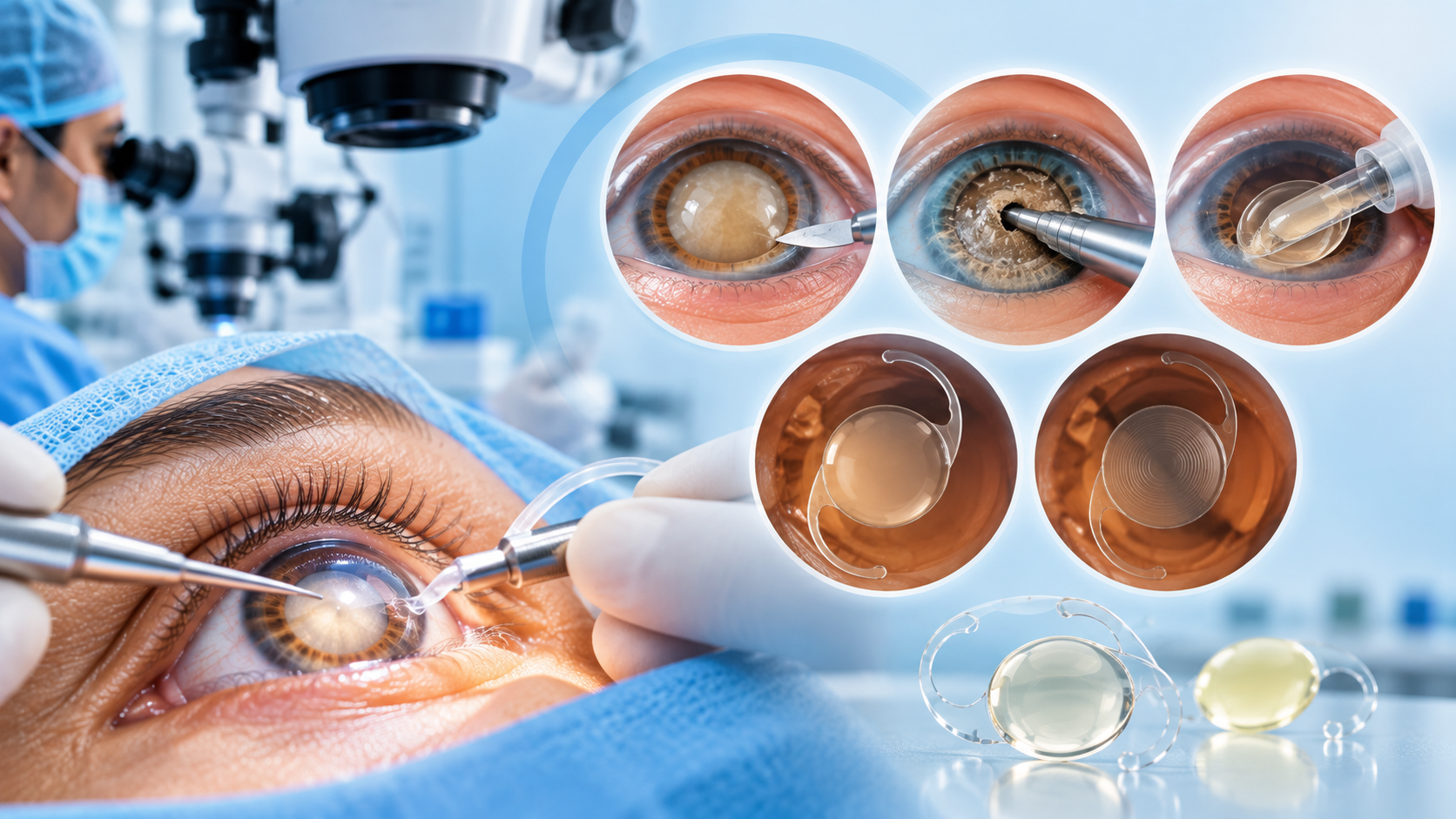
When you are told that you have a cataract, one of the first questions that may come to your mind is:
“What kind of cataract surgery will I need?”
Many people are surprised to learn that cataract surgery is not discussed as just one single approach. Advances in eye care have introduced different surgical techniques, and the most suitable option can depend on several factors related to the cataract and the individual eye.
The type of cataract, its density, the condition of the eye and the surgeon’s assessment can all play a role in deciding the appropriate approach.
Understanding the different types of cataract surgery can help you feel more informed before discussing treatment with your eye specialist.
At Ishwar Eye Centre, the appropriate surgical approach is determined after a detailed evaluation of the patient’s eyes and individual visual needs.
What Happens During Cataract Surgery?
A cataract develops when the natural lens of the eye becomes cloudy.
This clouding can gradually affect vision and may cause symptoms such as blurry vision, glare, difficulty seeing at night or colours appearing less bright.
During cataract surgery, the cloudy natural lens is removed and replaced with an artificial lens called an intraocular lens.
The technique used to remove the cataract can vary.
Here are some of the commonly discussed types of cataract surgery.
1. Phacoemulsification Cataract Surgery
Phacoemulsification cataract surgery is one of the commonly used techniques for cataract removal.
In this procedure, a small incision is made in the eye. An ultrasound device is then used to break the cloudy lens into smaller pieces.
These pieces are carefully removed from the eye, and an artificial intraocular lens is placed to replace the natural lens.
Because the cataract is broken into smaller fragments, the lens can be removed through a relatively small opening.
Phacoemulsification has become a widely used approach in modern cataract surgery, but the suitability of the procedure depends on the individual eye and cataract condition.
What Are the Advantages of Phacoemulsification?
Phacoemulsification is associated with a smaller incision compared with some traditional surgical approaches.
The procedure may offer benefits such as:
• A relatively small surgical incision
• Reduced need for stitches in suitable cases
• A shorter recovery period in many patients
• The ability to remove the cataract through a smaller opening
However, every surgery and recovery experience can vary.
Your eye doctor can explain whether phacoemulsification is suitable based on the condition of your eye.
2. Micro Incision Cataract Surgery, MICS
Micro incision cataract surgery, or MICS, is a cataract surgery technique performed through a very small incision.
It is based on the principle of removing the cataract through a smaller surgical opening.
Specialised instruments and techniques are used during the procedure.
The goal is to minimise the size of the incision while safely removing the cataract and placing an intraocular lens.
The exact approach can depend on factors such as the cataract, the condition of the cornea and other individual eye characteristics.
How Is MICS Different From Regular Cataract Surgery?
The main difference relates to the size of the incision used during the procedure.
Micro incision cataract surgery uses a very small incision and may involve specialised equipment and surgical techniques.
However, a smaller incision alone does not mean that one procedure is automatically better for every patient.
The right approach depends on several factors.
Your eye surgeon will recommend the technique that is most appropriate for your individual condition.
3. Small Incision Cataract Surgery, SICS
Small incision cataract surgery, or SICS, is another approach used for cataract removal.
During this procedure, a small incision is made to remove the cataract and replace the cloudy natural lens with an intraocular lens.
SICS may be considered in certain situations depending on the nature and density of the cataract and other eye related factors.
The surgical technique and incision are different from those used in phacoemulsification.
Your eye doctor can explain which technique may be suitable and why.
When Is Small Incision Cataract Surgery Considered?
The choice between small incision cataract surgery and other techniques depends on the individual patient.
Factors that may influence the decision include:
• The type and density of the cataract
• The overall condition of the eye
• Corneal health
• Previous eye conditions or surgeries
• The surgeon’s assessment
There is no single cataract surgery technique that is ideal for every person.
A detailed examination helps determine the safest and most appropriate option.
4. Laser Assisted Cataract Surgery, FLACS
Laser assisted cataract surgery, also known as FLACS, uses femtosecond laser technology during certain steps of cataract surgery.
The laser may be used to assist with specific parts of the procedure, depending on the surgical plan and the patient’s eye condition.
After the laser assisted steps, additional surgical steps are performed to remove the cataract and place the artificial lens.
FLACS is different from traditional phacoemulsification techniques because laser technology is used during selected stages of the surgery.
FLACS can prolong the surgical time because two machines and multiple interfaces are involved.
However, laser assisted surgery may not be necessary or suitable for every cataract.
Your eye doctor can help you understand whether this approach is appropriate for your condition.
Is Laser Assisted Cataract Surgery Better?
This is a common question.
The answer is not the same for everyone.
Technology can play an important role in cataract surgery, but the best procedure depends on your individual eye, cataract characteristics and overall treatment needs.
FLACS does not offer any proven advantage over the established phacoemulsification procedure. The laser is used only in a few steps of the procedure, while the main part of the surgery is still performed using the conventional phacoemulsification machine. There is no advantage in terms of surgical time or safety compared with phacoemulsification.
A newer or more advanced sounding technique is not automatically the right choice for every patient.
The most important thing is selecting an approach that is appropriate for your eye.
Your doctor can explain the expected benefits and limitations of the recommended procedure.
What About the Artificial Lens Used in Cataract Surgery?
The surgical technique is only one part of cataract treatment.
Another important consideration is the type of intraocular lens used to replace the cloudy natural lens.
Different lenses may be available depending on your visual needs and eye condition.
Your doctor may discuss options related to distance vision, near vision or other visual requirements.
The most appropriate lens choice depends on your individual eyes and lifestyle needs.
This is why cataract surgery planning usually involves more than simply choosing between different surgical techniques.
How Does the Doctor Decide Which Cataract Surgery Is Right for You?
Your cataract surgeon will usually consider several factors before recommending a surgical approach.
These may include:
• The density and type of cataract
• The condition of your cornea
• The overall health of your eye
• Previous eye surgery
• Your visual requirements
• Other existing eye conditions
• The results of your eye examination
The decision is personalised.
Two people with cataracts may not necessarily need the exact same surgical approach.
Which Type of Cataract Surgery Has the Fastest Recovery?
Recovery after cataract surgery can depend on several factors, including the technique used and the condition of the individual eye.
Some procedures use smaller incisions, which may influence the recovery process.
However, recovery should not be judged only by the size of the incision.
Your overall eye health, the complexity of the surgery and how well you follow post operative instructions can also affect healing.
Your doctor can give you a better understanding of what to expect based on the procedure recommended for you.
Is Cataract Surgery Painful?
Cataract surgery is usually performed with appropriate anaesthesia to keep the procedure comfortable.
You may feel some pressure or sensations during the procedure, but your surgical team will guide you throughout the process.
After surgery, mild discomfort or irritation may occur during the initial recovery period.
Your doctor will provide instructions about medications and eye care after the procedure.
If you experience severe pain or a sudden change in vision after surgery, it is important to contact your eye doctor.
Choosing the Right Approach Matters
Learning about the different types of cataract surgery can help you understand the options available.
Phacoemulsification cataract surgery, micro incision cataract surgery, small incision cataract surgery and laser assisted cataract surgery are different approaches that may be considered depending on the individual case.
The goal is not to choose the procedure with the most advanced sounding name.
It is to choose the approach that is safe and appropriate for your eyes.
At Ishwar Eye Centre, a detailed eye evaluation can help determine the suitable cataract treatment approach based on your cataract, eye health and visual needs.
If you have been advised cataract surgery, discussing your concerns with an eye specialist can help you understand the procedure, recovery and treatment options available to you.
The right information can make the journey feel a little less overwhelming.
And when it comes to your vision, understanding your options is always a good place to begin.
Frequently Asked Questions
What are the different types of cataract surgery?
Some commonly discussed types include phacoemulsification cataract surgery, micro incision cataract surgery, small incision cataract surgery and laser assisted cataract surgery.
What is phacoemulsification cataract surgery?
Phacoemulsification is a technique in which ultrasound energy is used to break the cloudy cataract lens into smaller pieces so that it can be removed through a relatively small incision.
What is micro incision cataract surgery?
Micro incision cataract surgery, or MICS, is performed through a very small surgical incision using specialised instruments and techniques.
What is small incision cataract surgery?
Small incision cataract surgery, or SICS, is another surgical approach used to remove a cataract and replace the cloudy natural lens with an artificial intraocular lens.
What is laser assisted cataract surgery, FLACS?
FLACS uses femtosecond laser technology to assist with selected steps during cataract surgery. Your eye doctor can determine whether it is appropriate for your individual condition.
Which type of cataract surgery is best?
There is no single procedure that is best for everyone. The most suitable technique depends on factors such as the cataract, eye health and individual visual requirements.
How does a doctor decide which cataract surgery is suitable?
Your doctor may consider the type and density of the cataract, corneal health, overall eye condition, previous eye procedures and your visual needs before recommending a surgical approach.