
Waking up in the morning and reaching for your glasses.
Searching for them before you can even see clearly.
Taking extra care of contact lenses.
For many people with refractive errors, these everyday experiences eventually lead to one question:
“Can I get LASIK surgery?”
LASIK has become one of the most commonly discussed options for people who want to reduce their dependence on glasses or contact lenses. However, LASIK is not a one size fits all procedure.
Just because someone has spectacles does not automatically mean they are suitable for LASIK.
Your age, eye power, corneal thickness, overall eye health and several other factors can influence whether laser vision correction is appropriate for you.
This is why a proper laser vision correction eligibility check is an important first step before considering LASIK surgery.
At Ishwar Eye Centre, a detailed eye evaluation can help determine whether LASIK or another vision correction option may be suitable based on your individual eye condition.
What Is LASIK Surgery?
LASIK is a type of laser vision correction procedure used to treat certain refractive errors.
Refractive errors occur when light does not focus correctly on the retina, which can result in blurred vision.
LASIK may be used to correct conditions such as:
• Nearsightedness, also known as myopia
• Farsightedness, also known as hyperopia
• Astigmatism
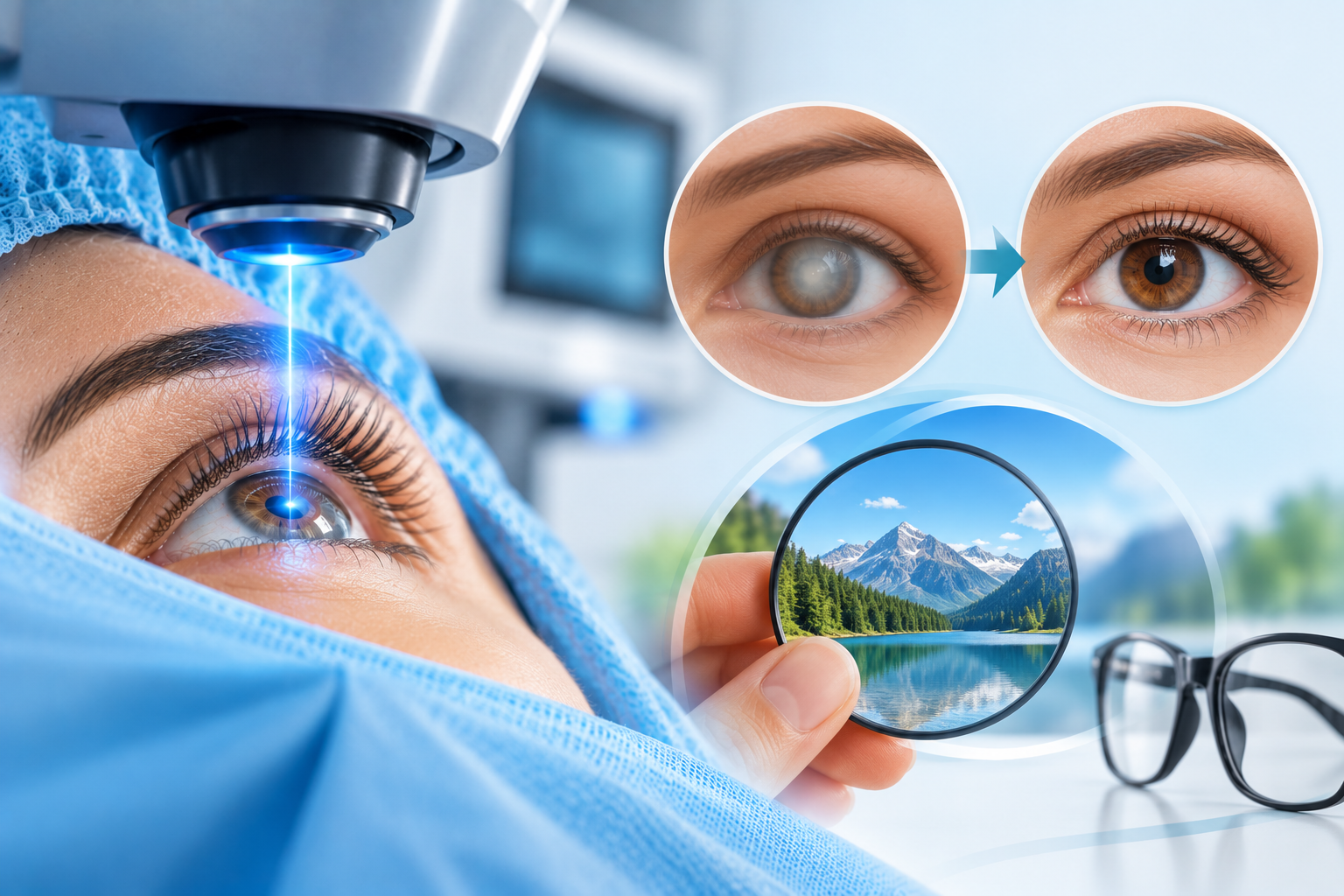
During the procedure, a laser is used to reshape the cornea so that light can focus more accurately on the retina.
The goal is to improve vision and reduce dependence on glasses or contact lenses.
However, the outcome and suitability of LASIK can vary from person to person.
This brings us to an important question.
Who Is a Candidate for LASIK Surgery?
There is no single answer that applies to everyone.
A person may be considered a potential candidate for LASIK based on several factors, including their age, stability of eye power, corneal health and overall eye condition.
The most important part is not deciding on your own whether you are suitable.
It is undergoing a detailed eye examination.
A proper assessment helps your eye doctor understand whether LASIK is safe and appropriate for your eyes.
LASIK Eligibility Criteria
The LASIK eligibility criteria involve more than simply checking your spectacle power.
Your eye doctor may consider several factors before recommending the procedure.
These may include:
• Your age
• The stability of your spectacle power
• The type and degree of refractive error
• Corneal thickness
• Corneal shape
• Overall eye health
• Presence of dry eye
• Retinal health
• Other medical or eye related conditions
Not everyone who meets one or two of these requirements will automatically be suitable for LASIK.
The final decision is based on a complete evaluation of the eye.
What Is the LASIK Age Limit and Requirements?
One of the common questions people ask is:
“What is the right age for LASIK?”
LASIK is generally considered for adults whose eye power has stabilised.
This is important because if the spectacle number is still changing significantly, undergoing laser vision correction may not provide the expected long term result.
There is no single age at which everyone automatically becomes eligible.
Your eye doctor will assess whether your refractive error has remained stable and whether your eyes have developed sufficiently for the procedure.
The LASIK age limit and requirements can also depend on your individual eye health.
As we grow older, other age related changes can occur in the eye. These may influence whether LASIK is the right option or whether another form of vision correction would be more appropriate.
This is why age is only one part of the evaluation.
Why Does Stable Eye Power Matter?
Imagine changing the prescription of your glasses every few months.
This may indicate that your refractive error is still changing.
LASIK reshapes the cornea based on your current refractive error. If your eye power continues to change after the procedure, you may eventually require glasses again or experience a change in vision.
For this reason, your doctor will usually review whether your spectacle power has remained reasonably stable before recommending LASIK.
A stable prescription does not guarantee eligibility.
But it is an important part of the evaluation.
What Is the Minimal Corneal Thickness for LASIK?
Corneal thickness is one of the important factors assessed during LASIK eligibility.
The cornea is the clear front surface of the eye. During LASIK, a small amount of corneal tissue is reshaped using a laser.
For this reason, the cornea needs to have sufficient thickness and appropriate structural characteristics for the procedure to be considered safe.
Many people search for a specific number when asking about minimal corneal thickness for LASIK.
However, there is no single thickness that can determine eligibility for everyone.
The amount of tissue that may need to be reshaped depends on factors such as your refractive error, corneal shape and the planned procedure.
Your eye doctor will perform corneal measurements and evaluate whether sufficient corneal tissue can remain after laser treatment.
In other words, corneal thickness is important, but it is not assessed in isolation.
Why Is Corneal Shape Important?
A cornea may have adequate thickness but still require further evaluation because of its shape.
During a LASIK evaluation, your doctor may perform specialised tests to study the curvature and structure of the cornea.
This helps identify whether the cornea appears healthy and suitable for laser vision correction.
Certain corneal conditions may make LASIK unsuitable or may require an alternative treatment approach.
This is one reason why a comprehensive laser vision correction eligibility check is essential.
A standard vision test alone cannot determine whether someone is suitable for LASIK.
Does Your Spectacle Number Matter?
Yes, your refractive error is one of the factors considered during LASIK evaluation.
However, having a high or low spectacle number does not automatically mean that LASIK is either suitable or unsuitable.
The type of refractive error, the amount of correction required and the overall health and structure of your eye are all considered.
Your doctor may discuss the expected results and limitations based on your individual prescription.
In some cases, another type of vision correction procedure may be more appropriate.
Can Dry Eyes Affect LASIK Eligibility?
Dry eye symptoms are another important consideration.
If you already experience significant dryness, burning, irritation or discomfort, your eye doctor may assess this before recommending LASIK.
LASIK can affect the surface of the eye, and existing dry eye symptoms may need to be evaluated and managed.
This does not mean that every person with dry eye is automatically unsuitable for LASIK.
However, it does mean that the condition should be properly assessed before making a decision.
Can Everyone With Healthy Eyes Undergo LASIK?
Not necessarily.
Good general vision and healthy eyes do not automatically mean that LASIK is the right procedure.
A person may have healthy eyes but still have factors related to corneal thickness, corneal shape, eye power or other measurements that need consideration.
This is why it is important to avoid comparing your eligibility with someone else’s.
Your friend may have undergone LASIK successfully.
That does not automatically mean the procedure is suitable for you.
Every eye is different.
What Happens During a LASIK Eligibility Check?
A detailed LASIK evaluation usually involves more than reading letters from an eye chart.
Your eye doctor may perform tests to assess:
• Your current refractive error
• Stability of your eye power
• Corneal thickness
• Corneal shape and curvature
• Overall corneal health
• Tear film and dry eye concerns
• Retinal health
• Other eye conditions that may affect suitability
The evaluation helps your doctor determine whether LASIK may be an appropriate option and whether another procedure should be considered instead.
The goal is not to simply approve everyone for surgery.
The goal is to find the safest and most suitable option for your eyes.
What If You Are Not Eligible for LASIK?
Being told that LASIK is not suitable can feel disappointing.
But it does not necessarily mean that there are no other options for vision correction.
For patients who are not eligible for LASIK, a suitability check can be done for ICL (Implantable Collamer Lens) implantation, which is an equally good technique for removing glasses. At Ishwar Eye Centre, we have more than a decade of experience with both LASIK and ICL surgery.
Depending on your eye condition, your doctor may discuss other treatment options that may be more appropriate.
The important thing is not to undergo a procedure simply because you want freedom from glasses. The procedure should be suitable for your eyes.
A personalised recommendation based on a detailed examination is always more important than choosing a procedure based on popularity.
Being told that LASIK is not suitable can feel disappointing.
But it does not necessarily mean that there are no other options for vision correction.
Depending on your eye condition, your doctor may discuss other treatment options that may be more appropriate.
The important thing is not to undergo a procedure simply because you want freedom from glasses.
The procedure should be suitable for your eyes.
A personalised recommendation based on a detailed examination is always more important than choosing a procedure based on popularity.
How Should You Prepare for a LASIK Consultation?
Before your consultation, be ready to discuss your eye history and any previous eye conditions or treatments.
Tell your doctor if you:
• Have experienced frequent dry eyes
• Have had previous eye surgery
• Have any known corneal condition
• Take regular medications
• Have experienced changes in your vision
• Have a history of eye disease
Your doctor may also provide specific instructions regarding contact lens use before your LASIK evaluation, as contact lenses can temporarily affect the shape of the cornea.
Following these instructions can help ensure that your eye measurements are accurate.
Is LASIK the Right Choice for You?
LASIK can be an effective option for suitable candidates, but eligibility should always be based on a proper eye examination.
The most important question is not:
“Can LASIK remove my glasses?”
It is:
“Is LASIK safe and suitable for my eyes?”
A comprehensive evaluation can help answer that question.
At Ishwar Eye Centre, a detailed eye assessment can help determine whether you meet the LASIK eligibility criteria and whether LASIK laser surgery or another vision correction option may be appropriate for your individual needs.
The right procedure begins with the right evaluation.
Because when it comes to your vision, suitability matters just as much as the procedure itself.
Frequently Asked Questions
Who is a candidate for LASIK surgery?
A potential candidate for LASIK is usually assessed based on factors such as age, stable eye power, corneal thickness, corneal shape, refractive error and overall eye health. A detailed eye examination is required to determine individual eligibility.
What is the LASIK age limit and requirements?
LASIK is generally considered for adults whose eye power has stabilised. However, age alone does not determine eligibility. Your eye doctor will also assess your eye health, cornea and refractive error.
What is the minimal corneal thickness for LASIK?
There is no single corneal thickness that determines LASIK eligibility for everyone. The required thickness depends on factors such as corneal structure, eye power and the amount of corneal tissue that may need to be reshaped.
Can I undergo LASIK if my spectacle power is still changing?
If your spectacle power is changing significantly, your doctor may recommend waiting until it becomes stable before considering LASIK. The appropriate decision depends on your individual eye condition.
Can dry eyes affect LASIK surgery?
Yes. Dry eye symptoms are assessed during a LASIK evaluation because they may affect suitability and recovery. Your doctor can determine whether dry eye needs to be managed before considering laser vision correction.
What happens if I am not eligible for LASIK?
If LASIK is not suitable for you, your eye doctor may discuss other vision correction options depending on your eye condition. Not being eligible for LASIK does not automatically mean there are no other options.
How can I check my eligibility for LASIK?
A comprehensive laser vision correction eligibility check with an eye specialist can assess your eye power, corneal thickness, corneal shape, dry eye concerns and overall eye health.